Introduction
In this brief installment of Judas Within: Enduring Evil Within the Church, we will examine a letter written by the great 4th century Church Father, St. Basil (often called “the Great”) that sounds as if it could have been written yesterday (or many other times in church history) with its description of troubles in the Church. It is important to recognize that many of our Christian ancestors have faced such troubles within the Church, and yet did not cease to believe that it was the one true Church, and would remain as such until Christ’s return.
Roadmap
Our Roadmap is as follows:
- Our thesis is that St. Basil’s Letter 164 provides an illuminating example of the reality of the “Judas Within” the Church. We will show this by:
- Providing historical context for the letter; then
- Quoting the relevant portion of the letter; then
- Summarizing our conclusions.
Historical Context
The fourth century was often beset by chaos in the Church. Despite the fact that active persecution by pagan emperors had come to an end (excepting Julian the Apostate), the Church was often afflicted by plagues of heretics who disturbed the minds of the faithful through error and schism.
Though by no means the only one, the most prominent and formidable heresy was Arianism, concocted by Arius, a priest from Alexandria, Egypt. This heresy essentially taught that Christ was not divine. It was formally condemned at the Ecumenical Council of Nicaea in 325. However, many Arians throughout the Church kept trying to fight against the Church’s teaching and subvert Her clergy and laity for decades to come, oftentimes by promoting “compromise” creeds to substitute the Nicene creed. The heresy continued to exist for several centuries (and arguably exists today in the form of sects like Unitarianism, Jehovah’s Witnesses, etc.).
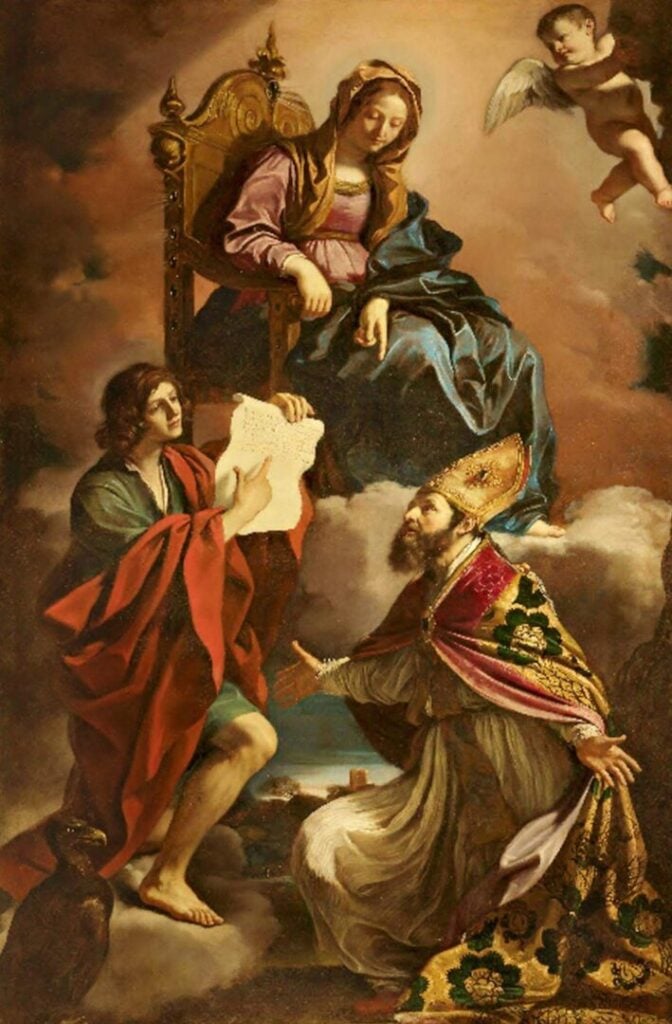
St. Basil (330-379) was one of the great “Cappadocian Fathers” (from Cappadocia, which is in modern day Turkey) who stood for orthodoxy amidst this storm. He was frequently engaged in refuting such heretics, and often bemoaned the damage they were wrecking on the Church.
St. Basil, Letter 164
Written in 374 to Ascholius, Bishop of Thessalonica, St. Basil’s Letter 164 made a number of observations that, while dark, can be encouraging to us in our own time of confusion and uncertainty in the Church1:
In fact, we ascribe to ourselves and our sins the blame for such extensive spreading of the power of the heretics. For, almost no part of the world has escaped the conflagration of heresy…But, what are our conditions? Charity has grown cold. The doctrine of the Fathers is being destroyed; shipwreck in the faith is frequent; the mouths of the pious are silent; people, driven from the houses of prayer, out in the open fields lift up their hands to the Lord in heaven. Truly, the afflictions are heavy, but nowhere is there martyrdom, because those who inflict the evils upon us have the same name as we do [“Christians”]. For these reasons do you yourself beseech the Lord and join with you in prayer in behalf of the churches all the noble athletes of Christ, in order that, if some time still remains for the existence of the world, and all things are not being driven 325 | 326 together in the opposite direction [i.e. destruction], God, being reconciled to His churches, may lead them back again to the ancient peace.
Conclusion
From this letter, we can see that even in the fourth century, during the age of the Church Fathers, the Catholic Church endured the “Judas Within” in the form of:
- The apparent strength of heresy and heretics, due to the sins of the faithful;
- Doctrinal laxity;
- Loss of faith among many Catholics;
- Silence among the orthodox, while the heterodox are bold and loud; and
- Persecution is leveled against the faithful by those who “have the same name as we do” (i.e. “Christians” and “Catholics”).
Thus, we see in his letter an example of a true “one-niner” (referring to Ecclesiastes 1:9): there is nothing new under the sun.
 Buy Us a Coffee