(Updated November 8, 2025)
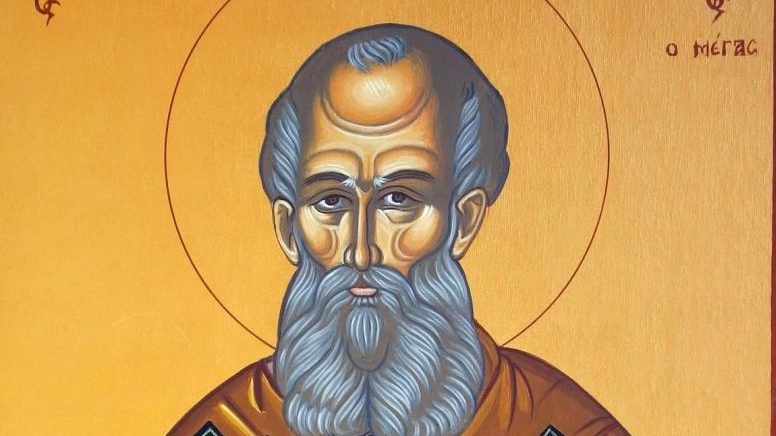
This Author Quote Archive collects pertinent quotes from the Church Father, St. Athanasius.
Next to each quote are the Topic Quote Archives in which they are included.
This Quote Archive is being continuously updated as research continues. Quotes marked with “***” have not yet been organized into their respective Topic Quote Archives.
Treatises
St. Athanasius, On the Incarnation of the Word (c. 330)
(§§8, 46, 55)
(§8) …He took pity on our race, and had mercy on our infirmity, and condescended to our corruption, and, unable to bear that death should have the mastery—lest the creature should perish, and His Father’s handiwork in men be spent for naught—He takes unto Himself a body, and that of no different sort from ours. For He did not simply will to become embodied, or will merely to appear. For if He willed merely to appear, He was able to effect His divine appearance by some other and higher means as well. But He takes a body of our kind, and not merely so, but from a spotless and stainless virgin, knowing not a man, a body clean and in very truth pure from intercourse of men. For being Himself mighty, and Artificer of everything, He prepares the body in the Virgin as a temple unto Himself, and makes it His very own as an instrument, in it manifested, and in it dwelling…
(§46) When did men begin to desert the worshiping of idols, save since God, the true Word of God, has come among men? Or when have the oracles among the Greeks, and everywhere, ceased and become empty, save when the Savior has manifested Himself upon earth?
Or when did those who are called gods and heroes in the poets begin to be convicted of being merely mortal men, save since the Lord erected His conquest of death, and preserved incorruptible the body he had taken, raising it from the dead?
Or when did the deceitfulness and madness of demons fall into contempt, save when the power of God, the Word, the Master of all these as well, condescending because of man’s weakness, appeared on earth? Or when did the art and the schools of magic begin to be trodden down, save when the divine manifestation of the Word took place among men?
And, in a word, at what time has the wisdom of the Greeks become foolish, save when the true Wisdom of God manifested itself on earth? For formerly the whole world and every place was led astray by the worshiping of idols, and men regarded nothing else but the idols as gods. But now, all the world over, men are deserting the superstition of the idols, and taking refuge with Christ; and, worshiping Him as God, are by His means coming to know that Father also Whom they knew not.
And, marvelous fact, whereas the objects of worship were various and of vast number, and each place had its own idol, and he who was accounted a god among them had no power to pass over to the neighboring place, so as to persuade those of neighboring peoples to worship him, but was barely served even among his own people; for no one else worshiped his neighbor’s god—on the contrary, each man kept to his own idol, thinking it to be lord of all—Christ alone is worshiped as one and the same among all peoples; and what the weakness of the idols could not do—to persuade, namely, even those dwelling close at hand—this Christ has done, persuading not only those close at hand, but simply the entire world, to worship one and the same Lord, and through Him God, even His Father…
(§55) This, then, after what we have so far said, it is right for you to realize, and to take as the sum of what we have already stated, and to marvel at exceedingly; namely, that since the Savior has come among us, idolatry not only has no longer increased, but what there was is diminishing and gradually coming to an end: and not only does the wisdom of the Greeks no longer advance, but what there is is now fading away: and demons, so far from cheating any more by illusions and prophecies and magic arts, if they so much as dare to make the attempt, are put to shame by the sign of the Cross.
And to sum the matter up: behold how the Savior’s doctrine is everywhere increasing, while all idolatry and everything opposed to the faith of Christ is daily dwindling, and losing power, and falling. And thus beholding, worship the Savior, “Who is above all” and mighty, even God the Word; and condemn those who are being worsted and done away by Him.
For as, when the sun is come, darkness no longer prevails, but if any be still left anywhere it is driven away; so, now that the divine Appearing of the Word of God is come, the darkness of the idols prevails no more, and all parts of the world in every direction are illumined by His teaching.
And as, when a king is reigning in some country without appearing but keeps at home in his own house, often some disorderly persons, abusing his retirement, proclaim themselves; and each of them, by assuming the character, imposes on the simple as king, and so men are led astray by the name, hearing that there is a king, but not seeing him, if for no other reason, because they cannot enter the house; but when the real king comes forth and appears, then the disorderly impostors are exposed by his presence, while men, seeing the real king, desert those who previously led them astray.
In like manner, the evil spirits formerly used to deceive men, investing themselves with God’s honor; but when the Word of God appeared in a body, and made known to us His own Father, then at length the deceit of the evil spirits is done away and stopped, while men, turning their eyes to the true God, Word of the Father, are deserting the idols, and now coming to know the true God.
Now this is a proof that Christ is God the Word, and the Power of God. For whereas human things cease, and the Word of Christ abides, it is clear to all eyes that what ceases is temporary, but that He Who abides is God, and the true Son of God, His only-begotten Word.
St. Athanasius, De Decretis: Defense of the Nicene Definition (c. 350-56)
(§19) The Council wishing to do away with the irreligious phrases of the Arians, and to use instead the acknowledged words of the Scriptures, that the Son is not from nothing but “from God,” and is “Word” and “Wisdom,” and not creature or work, but a proper offspring from the Father, Eusebius and his fellows, led by their inveterate heterodoxy, understood the phrase “from God” as belonging to us, as if in respect to it the Word of God differed nothing from us, and that because it is written, “There is one God, from whom, all things” (1 Cor. 8:6); and again, “Old things are passed away, behold, all things are become new, and all things are from God” (2 Cor. 5:17). But the Fathers, perceiving their craft and the cunning of their irreligion, were forced to express more distinctly the sense of the words “from God.” Accordingly, they wrote “from the essence of God,” in order that “from God” might not be considered common and equal in the Son and in things originate, but that all others might be acknowledged as creatures, and the Word alone as from the Father…For neither are other things as the Son, nor is the Word one among others, for He is Lord and Framer of all; and on this account did the Holy Council declare expressly that He was of the essence of the Father, that we might believe the Word to be other than the nature of things originate, being alone truly from God; and that no subterfuge should be left open to the irreligious. This then was the reason why the Council wrote “of the essence.”
(§20) Again, when the Bishops said that the Word must be described as the True Power and Image of the Father, in all things exact and like the Father, and as unalterable, and as always, and as in Him without division (for never was the Word not, but He was always, existing everlastingly with the Father, as the radiance of light), Eusebius and his fellows endured indeed, as not daring to contradict, being put to shame by the arguments which were urged against them; but withal they were caught whispering to each other and winking with their eyes, that “like,” and “always,” and “power,” and “in Him,” were, as before, common to us and the Son, and that it was no difficulty to agree to these…But the Bishops discerning in this too their dissimulation, and whereas it is written, “Deceit is in the heart of the irreligious that imagine evil” (Prov. 12:20), were again compelled on their part to collect the sense of the Scriptures, and to re-say and re-write what they had said before, more distinctly still, namely, that the Son is “one in essence” with the Father: by way of signifying, that the Son was from the Father, and not merely like, but the same in likeness, and of showing that the Son’s likeness and unalterableness was different from such copy of the same as is ascribed to us, which we acquire from virtue on the ground of observance of the commandments.
St. Athanasius, Four Discourses Against the Arians: Discourse 2 (c. 356-360)
Therefore let those who deny that the Son is from the Father by nature and proper to His Essence, deny also that He took true human flesh of Mary Ever-Virgin; for in neither case had it been of profit to us men, whether the Word were not true and naturally Son of God, or the flesh not true which He assumed…
St. Athanasius, Four Discourses Against the Arians: Discourse 3 (c. 356-60)
For no longer according to our former origin in Adam do we die; but henceforward our origin and all infirmity of flesh being transferred to the Word, we rise from the earth, the curse from sin being removed, because of Him who is in us, and who has become a curse for us. And with reason; for as we are all from earth and die in Adam, so being regenerated from above of water and Spirit [baptism], in the Christ we are all quickened; the flesh being no longer earthly, but being henceforth made Word, by reason of God’s Word who for our sake “became flesh.”
St. Athanasius, On Councils, or De Synodis (359-361)
(Part 1, §7) ***
Having therefore no reason on their side, but being in difficulty whichever way they turn, in spite of their pretenses, they have nothing left but to say: “Forasmuch as we contradict our predecessors, and transgress the traditions of the Fathers, therefore we have thought good that a Council should meet; but again, whereas we fear lest, should it meet at one place, our pains will be thrown away, therefore we have thought good that it be divided into two; that so when we put forth our documents to these separate portions, we may overreach with more effect, with the threat of Constantius the patron of this irreligion, and may supersede the acts of Nicaea, under pretense of the simplicity of our own documents.”
If they have not put this into words, yet this is the meaning of their deeds and their disturbances. Certainly, many and frequent as have been their speeches and writings in various Councils, never yet have they made mention of the Arian heresy as objectionable; but, if any present happened to accuse the heresies, they always took up the defense of the Arian, which the Nicene Council had anathematized; nay, rather, they cordially welcomed the professors of Arianism. This then is in itself a strong argument, that the aim of the present Councils was not truth, but the annulling of the acts of Nicaea; but the proceedings of them and their friends in the Councils themselves, make it equally clear that this was the case. For now we must relate everything as it occurred.
(§47) …For myself, I have written these brief remarks, from my feeling towards persons who were religious to Christ-ward; but were it possible to come by the Epistle which we are told that the former wrote, I consider we should find further grounds for the aforesaid proceeding of those blessed men. For it is right and meet thus to feel, and to maintain a good conscience toward the Fathers, if we be not spurious children, but have received the traditions from them, and the lessons of religion at their hands.
(§54) This is why the Nicene Council was correct in writing, what it was becoming to say, that the Son, begotten from the Father’s essence, is coessential with Him. And if we too have been taught the same thing, let us not fight with shadows, especially as knowing, that they who have so defined, have made this confession of faith, not to misrepresent the truth, but as vindicating the truth and religiousness towards Christ, and also as destroying the blasphemies against Him of the Ario-maniacs. For this must be considered and noted carefully, that, in using unlike-in-essence, and other-in-essence, we signify not the true Son, but some one of the creatures, and an introduced and adopted Son, which pleases the heretics; but when we speak uncontroversially of the Coessential, we signify a genuine Son born of the Father; though at this Christ’s enemies often burst with rage. What then I have learned myself, and have heard men of judgment say, I have written in few words; but do you, remaining on the foundation of the Apostles, and holding fast the traditions of the Fathers, pray that now at length all strife and rivalry may cease, and the futile questions of the heretics may be condemned, and all logomachy; and the guilty and murderous heresy of the Arians may disappear, and the truth may shine again in the hearts of all, so that all everywhere may “say the same thing” (1 Cor. 1:10), and think the same thing, and that, no Arian contumelies remaining, it may be said and confessed in every Church, “One Lord, one faith, one baptism” (Eph. 4:5), in Christ Jesus our Lord, through whom to the Father be the glory and the strength, unto ages of ages. Amen.
Homilies
St. Athanasius, Homily of the Papyrus of Turin: In Praise of the Blessed Virgin1
O noble Virgin, truly you are greater than any other greatness. For who is your equal in greatness, O dwelling place of God the Word? To whom among all creatures shall I compare you, O Virgin? You are greater than them all. O [Ark of the New] Covenant, clothed with purity instead of gold! You are the Ark in which is found the golden vessel containing the true manna, that is, the flesh in which divinity resides. Should I compare you to the fertile earth and its fruits? You surpass them, for it is written: “The earth is my footstool” (Isa. 66:1). But you carry within you the feet, the head, and the entire body of the perfect God.
If I say that heaven is exalted, yet it does not equal you, for it is written: “Heaven is my throne” (Isa. 66:1), while you are God’s place of repose. If I say that the angels and archangels are greater—but you are greater than them all, for the angels and archangels serve with trembling the One who dwells in your womb, and they dare not speak in his presence, while you speak to him freely. 106 | 107
If we say that the cherubim are great, you are greater than they, for the cherubim carry the throne of God (cf. Ps. 80:1; 99:1), while you hold God in your hands. If we say that the seraphim are great, you are greater than them all, for the seraphim cover their faces with their wings (cf. Isa. 6:2), unable to look upon the perfect glory, while you not only gaze upon his face but caress it and offer your breasts to his holy mouth…
As for Eve, she is the mother of the dead, “for as in Adam all die, even so in Christ shall all be made alive” (1 Cor. 15:22). Eve took [fruit] from the tree and made her husband eat of it along with her. And so they ate of that tree of which God had told them: “The day you eat of it, you shall die” (Gen. 2:17). Eve took [fruit] from it, ate some of it, and gave some to her husband [that he might eat] with her. He ate of it, and he died.
In you, instead, O wise Virgin, dwells the Son of God: he, that is, who is the tree of life. Truly he has given us his body, and we have eaten of it. That is how life came to all, and all have come to life by the mercy of God, your beloved Son. That is why your spirit is full of joy in God your Savior (Luke 1:47)!
Festal Letters
St. Athanasius, Festal Letter 1 (329)
(§§6-7) *** (LENT)
(§6) …And thus Moses, as long as he talked with God, fasted indeed bodily, but was nourished by divine words. When he descended among men, and God was gone up from him, he suffered hunger like other men. For it is not said that he fasted longer than forty days—those in which he was conversing with God. And, generally, each one of the saints has been thought worthy of similar transcendent nourishment.
(§7) Wherefore, my beloved, having our souls nourished with divine food, with the Word, and according to the will of God, and fasting bodily in things external, let us keep this great and saving feast as becomes us…
St. Athanasius, Festal Letter 2 (330)
(§§7-8)
(§7) …Again we write, again keeping to the apostolic traditions, we remind each other when we come together for prayer; and keeping the feast in common, with one mouth we truly give thanks to the Lord. Thus giving thanks unto Him, and being followers of the saints, “we shall make our praise in the Lord all the day,” as the Psalmist says. So, when we rightly keep the feast, we shall be counted worthy of that joy which is in heaven.
*** (§8) We begin the fast of forty days on the 13th of the month Phamenoth (Mar. 9). After we have given ourselves to fasting in continued succession, let us begin the holy Paschal week on the 18th of the month Pharmuthi (April 13). Then resting on the 23rd of the same month Pharmuthi (April 18), and keeping the feast afterwards on the first of the week, on the 24th (April 19), let us add to these the seven weeks of the great Pentecost, wholly rejoicing and exulting in Christ Jesus our Lord, through Whom to the Father be glory and dominion in the Holy Ghost, forever and ever. Amen. *** (LENT)
St. Athanasius, Festal Letter 3 (331)
(§§5-6) *** (LENT)
(§5) …Thus, singing praises, and seeing that the sin which is in us has been cast into the sea, we pass over to the wilderness. And being first purified by the fast of forty days, by prayers, and fastings, and discipline, and good works, we shall be able to eat the holy Passover in Jerusalem.
(§6) The beginning of the fast of forty days is on the fifth of Phamenoth (Mar. 1); and when, as I have said, we have first been purified and prepared by those days, we begin the holy week of the great Easter on the tenth of Pharmuthi (Apr. 5), in which, my beloved brethren, we should use more prolonged prayers, and fastings, and watchings, that we may be enabled to anoint our lintels with precious blood, and to escape the destroyer [Ex. 12:7, 22-23]. Let us rest then, on the fifteenth of the month Pharmuthi (Apr. 10), for on the evening of that Saturday we hear the angels’ message, “Why seek you the living among the dead? He is risen” (Luke 24:5). Immediately afterwards that great Sunday receives us, I mean on the sixteenth of the same month Pharmuthi (April 11), on which our Lord having risen, gave us peace towards our neighbors. When then we have kept the feast according to His will, let us add from that first day in the holy week, the seven weeks of Pentecost, and as we then receive the grace of the Spirit, let us at all times give thanks to the Lord; through Whom to the Father be glory and dominion, in the Holy Ghost, for ever and ever. Amen.
St. Athanasius, Festal Letter 4 (332)
(§§1-2) *** LENT
(§1) …But notwithstanding my long journeys, and my grievous sickness, I have not forgotten to give you the festal notification, and, in discharge of my duty, I now announce to you the feast. For although the date of this letter is later than that usual for this announcement [the beginning of Lent], it should still be considered well-timed, since our enemies having been put to shame and reproved by the Church, because they persecuted us without a cause, we may now sing a festal song of praise, uttering the triumphant hymn against Pharaoh: “We will sing unto the Lord, for He is to be gloriously praised; the horse and his rider He hath cast into the sea” (Ex. 15:1).
(§2) It is well, my beloved, to proceed from feast to feast; again festal meetings, again holy vigils arouse our minds, and compel our intellect to keep vigil unto contemplation of good things. Let us not fulfill these days like those that mourn, but, by enjoying spiritual food, let us seek to silence our fleshly lusts. For by these means we shall have strength to overcome our adversaries, like blessed Judith [Jud. 13:8], when having first exercised herself in fastings and prayers, she overcame the enemies, and killed Holofernes. And blessed Esther, when destruction was about to come on all her race, and the nation of Israel was ready to perish, defeated the fury of the tyrant by no other means than by fasting and prayer to God, and changed the ruin of her people into safety [Est. 4:16].
St. Athanasius, Festal Letter 5 (333)
(§§1, 4, 6) *** (LENT)
(§1) We duly proceed, my brethren, from feasts to feasts, duly from prayers to prayers, we advance from fasts to fasts, and join holy days to holy days. Again the time has arrived which brings to us a new beginning [Apoc. 3:14], even the announcement of the blessed Passover, in which the Lord was sacrificed…
(§4) Now our life, my brethren, truly consists in our denying all bodily things, and continuing steadfast in those only of our Savior. Therefore the present season requires of us, that we should not only utter such words, but should also imitate the deeds of the saints…Let us thus engage in the holy fasts, as having been prescribed by Him, and by means of which we find the way to God. But let us not be like the heathen, or the ignorant Jews, or as the heretics and schismatics of the present time. For the heathen think the accomplishment of the feast is in the abundance of food; the Jews, erring in the type and shadow, think it still such; the schismatics keep it in separate places, and with vain imaginations. But let us, my brethren, be superior to the heathen, in keeping the feast with sincerity of soul, and purity of body; to the Jews, in no longer receiving the type and the shadow, but as having been gloriously illumined with the light of truth, and as looking upon the Sun of Righteousness [Mal. 4:2]; to the schismatics, in not rending the coat of Christ, but in one house, even in the Catholic Church, let us eat the Passover of the Lord, Who, by ordaining His holy laws, guided us towards virtue, and counseled the abstinence of this feast. For the Passover is indeed abstinence from evil for exercise of virtue, and a departure from death unto life. This may be learnt even from the type of old time. For then they toiled earnestly to pass from Egypt to Jerusalem, but now we depart from death to life; they then passed from Pharaoh to Moses, but now we rise from the devil to the Savior. And as, at that time, the type of deliverance bore witness every year, so now we commemorate our salvation. We fast meditating on death, that we may be able to live; and we watch, not as mourners, but as they that wait for the Lord, when He shall have returned from the wedding, so that we may vie with each other in the triumph, hastening to announce the sign of victory over death…
(§6) We begin the holy fast on the fourteenth of Pharmuthi (Apr. 9), on the [first] evening of the week; and having ceased on the nineteenth of the same month Pharmuthi (Apr. 14), the first day of the holy week dawns upon us on the twentieth of the same month Pharmuthi (Apr. 15), to which we join the seven weeks of Pentecost; with prayers, and fellowship with our neighbor, and love towards one another, and that peaceable will which is above all. For so shall we be heirs of the kingdom of heaven, through our Lord Jesus Christ, through Whom to the Father be glory and dominion for ever and ever. Amen. All the brethren who are with me salute you. Salute one another with a holy kiss.
St. Athanasius, Festal Letter 6 (334)
(§§12-13) *** (LENT)
(§12) …But as Israel, when going up to Jerusalem, was first purified in the wilderness, being trained to forget the customs of Egypt, the Word by this typifying to us the holy fast of forty days, let us first be purified and freed from defilement, so that when we depart hence, having been careful of fasting, we may be able to ascend to the upper chamber with the Lord [Luke 14:15], to sup with Him; and may be partakers of the joy which is in heaven. In no other manner is it possible to go up to Jerusalem, and to eat the Passover, except by observing the fast of forty days.
(§13) We begin the fast of forty days on the first day of the month Phamenoth (Feb. 25); and having prolonged it till the fifth of Pharmuthi (Mar. 31), suspending it upon the Sundays and the Saturdays preceding them, we then begin again on the holy days of Easter, on the sixth of Pharmuthi (Apr, 1), and cease on the eleventh of the same month (Apr. 6), late in the evening of the Saturday, whence dawns on us the holy Sunday, on the twelfth of Pharmuthi (Apr. 7), which extends its beams, with unobscured grace, to all the seven weeks of the holy Pentecost. Resting on that day, let us ever keep Easter joy in Christ Jesus our Lord, through Whom, to the Father, be glory and dominion for ever and ever. Amen. All the brethren who are with me salute you. Salute one another with a holy kiss.
St. Athanasius, Festal Letter 7 (335)
(§11) *** (LENT)
We begin the fast of forty days on the twenty-third of Mechir (Feb. 17), and the holy fast of the blessed feast on the twenty-eighth of Phamenoth (Mar. 24); and having joined to these six days after them, in fastings and watchings, as each one is able, let us rest on the third of the month Pharmuthi (Mar. 29), on the evening of the seventh day. Also that day which is holy and blessed in everything, which possesses the name of Christ, namely the Lord’s day, having risen upon us on the fourth of Pharmuthi (Mar. 30), let us afterwards keep the holy feast of Pentecost. Let us at all times worship the Father in Christ, through Whom to Him and with Him be glory and dominion by the Holy Ghost for ever and ever. Amen. All the brethren who are with me salute you: salute one another with a holy kiss.
St. Athanasius, Festal Letter 10 (338)
(§12) *** (LENT)
We begin the fast of forty days on the nineteenth of the month Mechir (Feb. 13); and the holy Easter-fast on the twenty-fourth of the month Phamenoth (Mar. 20). We cease from the fast on the twenty-ninth of the month Phamenoth (Mar. 25), late in the evening of the seventh day. And we thus keep the feast on the first day of the week which dawns on the thirtieth of the month Phamenoth (Mar. 26); from which, to Pentecost, we keep holy-day, through seven weeks, one after the other. For when we have first meditated properly on these things, we shall attain to be counted worthy of those which are eternal, through Christ Jesus our Lord, through Whom to the Father be glory and dominion for ever and ever. Amen. Greet one another with a holy kiss, remembering us in your holy prayers. All the brethren who are with me salute you, at all times remembering you. And I pray that ye may have health in the Lord, my beloved brethren, whom we love above all.
St. Athanasius, Festal Letter 11 (339)
(§15) *** (LENT)
We begin the fast of forty days on the ninth of the month Phamenoth (Mar. 5); and having, in these days, served the Lord with abstinence, and first purified ourselves, we commence also the holy Easter on the fourteenth of the month Pharmuthi (April 9). Afterwards, extending the fast to the seventh day, on the seventeenth of the month, let us rest late in the evening. And the light of the Lord having first dawned upon us, and the holy Sunday on which our Lord rose shining upon us, we should rejoice and be glad with the joy which arises from good works, during the seven weeks which remain—to Pentecost—giving glory to the Father, and saying, “This is the day which the Lord hath made: we will rejoice and be glad in it” (Ps. 118:24), through our Lord and Saviour Jesus Christ, through Whom to the same, and to His Father, be glory and dominion for ever and ever. Amen. Salute one another with a holy kiss. All the brethren who are with me salute you. That ye may have health in the Lord, I pray, brethren beloved.
St. Athanasius, Festal Letter 12 (probably 340)
(§1) *** (LENT)
But I have further deemed it highly necessary and very urgent, to make known to your modesty—for I have written this to each one—that you should proclaim the fast of forty days to the brethren, and persuade them to fast, lest, while all the world is fasting, we who are in Egypt should be derided, as the only people who do not fast, but take our pleasure in these days. For if, on account of the Letter [not] being yet read, we do not fast, we should take away this pretext, and it should be read before the fast of forty days, so that they may not make this an excuse for neglect or fasting. Also, when it is read, they may be able to learn about the fast. But O, my beloved, whether in this way or any other, persuade and teach them to fast the forty days. For it is a disgrace that when all the world does this, those alone who are in Egypt, instead of fasting, should find their pleasure. For even I being grieved because men deride us for this, have been constrained to write to you. When therefore you receive the letters, and have read them and given the exhortation, write to me in return, my beloved, that I also may rejoice upon learning it.
St. Athanasius, Festal Letter 13 (341)
(§8) *** (LENT)
We begin the fast of forty days on the thirteenth of Phamenoth (9 Mar.), and the holy week of Easter on the eighteenth of Pharmuthi (Apr. 13); and resting on the seventh day, being the twenty-third (Apr. 18), and the first of the great week having dawned on the twenty-fourth of the same month Pharmuthi (Apr. 19), let us reckon from it till Pentecost. And at all times let us sing praises, calling on Christ, being delivered from our enemies by Christ Jesus our Lord, through Whom to the Father be glory and dominion for ever and ever. Amen. Greet one another with a holy kiss. All those who are here with me salute you. I pray, my beloved brethren, that ye may have health in the Lord.
St. Athanasius, Festal Letter 14 (342)
(§§5-6) *** (LENT)
(§5) Therefore let us also, when we come to the feast, no longer come as to old shadows, for they are accomplished, neither as to common feasts, but let us hasten as to the Lord, Who is Himself the feast [1 Cor. 5:7], not looking upon it as an indulgence and delight of the belly, but as a manifestation of virtue. For the feasts of the heathen are full of greediness, and utter indolence, since they consider they celebrate a feast when they are idle; and they work the works of perdition when they feast. But our feasts consist in the exercise of virtue and the practice of temperance; as the prophetic word testifies in a certain place, saying, “The fast of the fourth, and the fast of the fifth, and the fast of the seventh, and the fast of the tenth [month], shall be to the house of Judah for gladness, and rejoicing, and for pleasant feasts” (Zech. 8:19). Since therefore this occasion for exercise is set before us, and such a day as this is come, and the prophetic voice has gone forth that the feast shall be celebrated, let us give all diligence to this good proclamation, and like those who contend on the race course, let us vie with each other in observing the purity of the fast [1 Cor. 9:24-27], by watchfulness in prayers, by study of the Scriptures, by distributing to the poor, and let us be at peace with our enemies. Let us bind up those who are scattered abroad, banish pride, and return to lowliness of mind, being at peace with all men, and urging the brethren unto love. Thus also the blessed Paul was often engaged in fastings and watchings, and was willing to be accursed for his brethren. Blessed David again, having humbled himself by fastings, used boldness, saying, “O Lord my God, if I have done this, if there is any iniquity in my hands, if I have repaid those who dealt evil with me, then may I fall from my enemies as a vain man” (Ps. 7:3-4; cf. Rom. 9:3). If we do these things, we shall conquer death; and receive an earnest of the kingdom of heaven.
(§6) We begin the holy Easter feast on the tenth of Pharmuthi (April 5), desisting from the holy fasts [Lent] on the fifteenth of the same month Pharmuthi (April 10), on the evening of the seventh day. And let us keep the holy feast on the sixteenth of the same month Pharmuthi (April 11); adding one by one [the days] till the holy Pentecost, passing on to which, as through a succession of feasts, let us keep the festival to the Spirit, Who is even now near us, in Jesus Christ, through Whom and with Whom to the Father be glory and dominion for ever and ever. Amen.
St. Athanasius, Festal Letter 19 (347)
(§§8-10) *** (LENT)
(§8) …I have been mindful while I keep the feast, to give you also notice of the great feast of Easter, that so we may go up together, as it were, to Jerusalem, and eat the Passover, not separately but as in one house [Ex. 12:8-9, 46]; let us not as sodden in water, water down the word of God; neither let us, as having broken its bones, destroy the commands of the Gospel. But as roasted with fire, with bitterness, being fervent in spirit, in fastings and watchings, with lying on the ground, let us keep it with penitence and thanksgiving.
(§9) We begin the fast of forty days on the sixth day of Phamenoth (Mar. 2); and having passed through that properly, with fasting and prayers, we may be able to attain to the holy day. For he who neglects to observe the fast of forty days, as one who rashly and impurely treads on holy things, cannot celebrate the Easter festival. Further, let us put one another in remembrance, and stimulate one another not to be negligent, and especially that we should fast those days, so that fasts may receive us in succession, and we may rightly bring the feast to a close.
(§10) The fast of forty days begins then, as was already said, on the sixth of Phamenoth (Mar. 2), and the great week of the Passion on the eleventh of Pharmuthi (Apr. 6). And let us rest from the fast on the sixteenth of it (Apr. 11), on the seventh day, late in the evening. Let us keep the feast when the first of the week dawns upon us, on the seventeenth of the same month Pharmuthi (Apr. 12). Let us then add, one after the other, the seven holy weeks of Pentecost, rejoicing and praising God, that He hath by these things made known to us beforehand, joy and rest everlasting, prepared in heaven for us and for those who truly believe in Christ Jesus our Lord; through Whom, and with Whom, be glory and dominion to the Father, with the Holy Ghost, for ever and ever. Amen.
St. Athanasius, Festal Letter 45 (373)
Let us all take up our sacrifices, observing distribution to the poor, and enter into the holy place, as it is written; “whither also our forerunner Jesus is entered for us, having obtained eternal redemption” (Heb. 6:20; 9:12)…And this is a great proof that, whereas we were strangers, we are called friends; from being formerly aliens, we are become fellow-citizens with the saints, and are called children of the Jerusalem which is above, whereof that which Solomon built was a type. For if Moses made all things according to the pattern shewed him in the mount, it is clear that the service performed in the tabernacle was a type of the heavenly mysteries, whereto the Lord, desirous that we should enter, prepared for us the new and abiding way. And as all the old things were a type of the new, so the festival that now is, is a type of the joy which is above, to which coming with psalms and spiritual songs, let us begin the fasts [of Lent].
Letters
St. Athanasius, Letter 29: To the Church of Alexandria (357)2 ***
But you are blessed, who by faith are in the Church, dwell upon the foundations of the faith, and have full satisfaction, even the highest degree of faith which remains among you unshaken. For it has come down to you from Apostolic tradition, and frequently has accursed envy wished to unsettle it, but has not been able. On the contrary, they have rather been cut off by their attempts to do so.
St. Athanasius, Letter 49: To Dracontius (354 or 355)
(§§4, 9) ***
(§4) For if all were of the same mind as your present advisers, how would you have become a Christian, since there would be no bishops? Or if our successors are to inherit this state of mind, how will the Churches be able to hold together? Or do your advisers think that you have received nothing, that they despise it? If so surely they are wrong. For it is time for them to think that the grace of the Font is nothing, if some are found to despise it. But you have received it, beloved Dracontius; do not tolerate your advisers nor deceive yourself. For this will be required of you by the God who gave it.
(§9) So take these as an example, beloved Dracontius, and do not say, or believe those who say, that the bishop’s office is an occasion of sin, nor that it gives rise to temptations to sin. For it is possible for you also as a bishop to hunger and thirst [Phil. 4:12], as Paul did. You can drink no wine, like Timothy [1 Tim. 5:23], and fast constantly too, like Paul [2 Cor. 11:27], in order that thus fasting after his example you may feast others with your words, and while thirsting for lack of drink, water others by teaching. Let not your advisers, then, allege these things. For we know both bishops who fast, and monks who eat. We know bishops who drink no wine, as well as monks who do. We know bishops who work wonders, as well as monks who do not. Many also of the bishops have not even married, while monks have been fathers of children; just as conversely we know bishops who are fathers of children and monks “of the completest kind.” And again, we know clergy who suffer hunger, and monks who fast. For it is possible in the latter way, and not forbidden in the former. But let a man, wherever he is, strive earnestly; for the crown is given not according to position, but according to action.
St. Athanasius, Letter 51: Second Letter to Lucifer ***
Accordingly we too, according to your confession of faith, desire to hold the Apostolic tradition, and to live according to the commands of the divine law, that we may be found along with you in that band in which now Patriarchs, Prophets, Apostles and Martyrs are rejoicing…And so we have received the books of your most wise and religious soul, in which we have seen the image of an Apostle, the confidence of a Prophet, the teaching of truth, the doctrine of true faith, the way of heaven, the glory of martyrdom, the triumphs against the Arian heresy, the unimpaired tradition of our Fathers, the right rule of the Church’s order…Forcibly and admirably, like light from darkness, you have separated the truth from the subtlety and dishonesty of heretics, defended the Catholic Church, proved that the arguments of the Arians are nothing but a kind of hallucination, and taught that the diabolical gnashings of the teeth are to be despised…Since then you are such a man, we ask the Lord in prayer that you may pray for us, that in His mercy He may now deign to look down upon the Catholic Church, and deliver all His servants from the hands of persecutors; in order that all they too who have fallen on account of temporal fear may at length be enabled to raise themselves and return to the way of righteousness, led away from which they are wandering, poor people, not knowing in what a pit they are.
St. Athanasius, Letter 60: To Adelphius, Bishop and Confessor, Against the Arians
(§§2, 6) ***
(§2) You, however, beloved and most truly longed-for, have done what befitted the tradition of the Church and your piety toward the Lord, in refuting, admonishing, and rebuking such men…
(§6) Such then, as we have above described, is the madness and daring of those men. But our faith is right, and starts from the teaching of the Apostles and tradition of the fathers, being confirmed both by the New Testament and the Old. For the Prophets say: “Send out Thy Word and Thy Truth” (Ps. 43:3), and “Behold the Virgin shall conceive and bear a son, and they shall call His name Emmanuel, which is being interpreted God with us” (Matt. 1:23; Isa. 7:14). But what does that mean, if not that God has come in the Flesh? While the Apostolic tradition teaches in the words of blessed Peter, “Forasmuch then as Christ suffered for us in the Flesh” (1 Pet. 4:1); and in what Paul writes, “Looking for the blessed hope and appearing of our great God and Savior Jesus Christ, Who gave Himself for us that He might redeem us from all iniquity, and purify unto Himself a people for His own possession, and zealous of good works” (Tit. 2:13-14).
St. Athanasius, Letter to the Bishops of Africa (c. 369)
But the word of the Lord which came through the ecumenical Synod at Nicaea, abides forever [1 Pet. 1:25].
Fragments
St. Athanasius, Fragment
But you are blessed, who by faith are in the Church, dwell upon the foundations of the faith, and have full satisfaction, even the highest degree of faith which remains among you unshaken. For it has come down to you from Apostolic tradition, and frequently has accursed envy wished to unsettle it, but has not been able. On the contrary, they have rather been cut off by their attempts to do so.
Footnotes
- Luigi Gambero, S.M., Thomas Buffer, trans., Mary and the Fathers of the Church: The Blessed Virgin Mary in Patristic Thought (San Francisco: Ignatius Press, 1999), 106-107; Athanasius, Homily of the Papyrus of Turin, ed. T. Lefort, in Le Muséon 71 (1958): 216-17. ↩︎
- This comes from a fragment that has been appended to Letter 29 based on internal evidence. ↩︎
 Buy Us a Coffee