Introduction
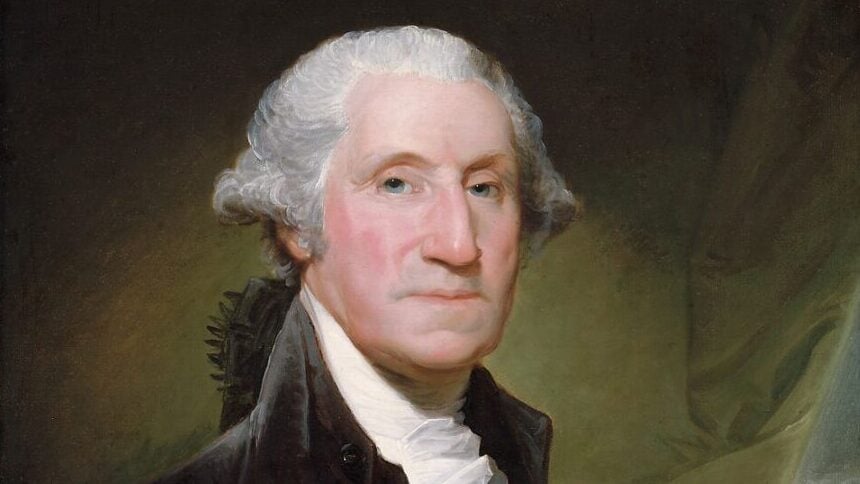
Thanksgiving is among the most American of American holidays. While it was not celebrated as an annual holiday until 1863, the precedent for the holiday as a national observance originates from a proclamation by President George Washington in the first year of his presidency. The proclamation is full of biblical language and religious overtones, imploring the new nation to offer thanks to God for His providential guidance of their affairs, and beg His mercy for their sins.
The Thanksgiving Proclamation was issued on October 3, 1789, and called for the first Thanksgiving to be celebrated on the last Thursday of November, which in 1789 was November 26th.
The story of this proclamation is an important one to remember, for it exemplifies the often thoroughly religious and Christian nature of many aspects of America’s Founding. While many other aspects of the Founding are less than ideal in light of Catholic truth, Catholics can nonetheless rightly rejoice in and respect those parts which express a thoroughly Christian sentiment that is largely, if not entirely compatible with the Catholic Faith.
President Washington’s Thanksgiving Proclamation is one such part of the American Founding Catholics ought to fully embrace.
Roadmap
Our Roadmap is as follows:
- Our thesis is that President George Washington’s Thanksgiving Proclamation represents a thoroughly and uniquely Christian part of the American Founding that is fully compatible with the Catholic Faith. We will show this by:
- Summarizing the broadly biblical foundations and historical context for the Proclamation; then
- Exploring the origins of the first national Thanksgiving in Congress;
- Exploring an earlier precedent from the Continental Congress during the War of Independence, appealed to in Congress to call upon President Washington to issue the proclamation; followed by
- Details of how the proclamation was received, and what President Washington did on the first Thanksgiving; and concluding with
- The text of the Thanksgiving Proclamation itself.
The Biblical Roots of Thanksgiving
Before proceeding into the details of our first national Thanksgiving, let’s first take a look at the biblical roots for days of thanksgiving, for they were indeed alluded to in several places in President Washington’s Proclamation.
Among the explicitly biblical phrases he used was “manifold mercies,” which comes from the ninth chapter of Nehemiah (Neh. 9:19, 27, KJV), where the rebuilder of Jerusalem’s walls after the long exile of the Jewish people offers a prayer of confession and thanksgiving to God for His provision for the Jewish people in the past, present, and future.
Verse 9 reads as follows in the King James Version of the Bible, which was by far the most popular translation in early America, and the one President Washington was very familiar with):
Yet thou in thy manifold mercies forsookest them not in the wilderness: the pillar of the cloud departed not from them by day, to lead them in the way; neither the pillar of fire by night, to shew them light, and the way wherein they should go.
Verse 27 reads as follows:
Therefore thou deliveredst them into the hand of their enemies, who vexed them: and in the time of their trouble, when they cried unto thee, thou heardest them from heaven; and according to thy manifold mercies thou gavest them saviors, who saved them out of the hand of their enemies.
As we will see, with the Revolutionary War and the recent establishment of the new Federal government under the Constitution in the background, President Washington’s Proclamation draws parallels between the freedom and independence of the United States from Great Britain with the Exodus of the Israelites from slavery in Egypt, and the return of Jewish exiles from Babylon in Nehemiah’s time. These were common motifs throughout early American rhetoric and thought–particularly the Exodus. Many believed God had intervened throughout the war and its aftermath, a belief echoed in the words of James Madison in Federalist No. 37 during the debate on whether to ratify the new Constitution:
It is impossible for any man of candor to reflect on this circumstance [the ability of the constitutional Convention to produce a Constitution] without partaking of the astonishment. It is impossible for the man of pious reflection not to perceive in it a finger of that Almighty hand which has been so frequently and signally extended to our relief in the critical stages of the revolution.
President Washington’s Proclamation used several other phrases found throughout the Bible, all of which further contributed to the religious solemnity of the occasion. For example, Washington refers to “Almighty God,” “Lord,” the “Ruler of Nations,” and prays that “true religion and virtue” may reign in America.
Congress Calls for Thanksgiving to God
While President Washington may have intended to issue a Thanksgiving Proclamation, the initiative started with Congress. Such proclamations had been a part of colonial life for generations, so it was no surprise that the new Federal legislature would call for one. This first Proclamation was proposed by Elias Boudinot, who had served as the President of Congress from 1782-83, represented New Jersey in the House of Representatives, and would go on to be one of the Founders and Presidents of the American Bible Society. The Congressional journal recorded the following on September 25, 17891:
Mr. Boudinot said, he could not think of letting the session pass over without offering an opportunity to all the citizens of the United States of joining, with one voice, in returning to Almighty God their sincere thanks for the many blessings he had poured down upon them. With this view, therefore, he would move the following resolution:
Resolved, That a joint committee of both Houses be directed to wait upon the President of the United States, to request that he would recommend to the people of the United States a day of public thanksgiving and prayer to be observed by acknowledging, with grateful hearts, the many signal favors of Almighty God, especially by affording them an opportunity peaceably to establish a Constitution of government for their safety and happiness.
Congressman Aedanus Burke, of South Carolina, objected that the Federal government had no role in issuing such proclamations, and that doing so was a “mimicking of European customs, where they made a mere mockery of thanksgivings.” As an example, they cited the singing of Te Deums (an ancient Catholic hymn of thanks) by both sides of an event in which it was a victory for one, and a defeat for another. Boudinot, in response, “was sorry to hear arguments drawn from the abuse of a good thing against the use of it. He hoped no gentleman would make a serious opposition to a measure both prudent and just.”
Congressman Thomas Tudor Tucker, also South Carolina, objected on the basis that Congress had no authority in matters of religion, and that it was not yet clear whether or not the Constitution was a blessing or not2:
The House had no business to interfere in a matter which did not concern them. Why should the President direct the people to do what, perhaps, they have no mind to do? They may not be inclined to turn thanks for a Constitution until they have experienced that it promotes their safety and happiness. We do not yet know but they may have reason to be dissatisfied with the effects it has already produced; but whether this be so or not, it is a business with which Congress have nothing to do; it is a religious matter, and, as such, is proscribed to us. If a day of thanksgiving must take place, let it be done by the authority of the several States; they know best what reason their constituents have to be pleased with the establishment of this Constitution.
In response, Congressman Roger Sherman of Connecticut–who was famous for being the only man to sign all of America’s great founding documents (the Declaration of Independence, the Articles of Confederation, and the Constitution)–defended the resolution as follows3:
Mr. Sherman justified the practice of thanksgiving, on any signal event, not only as a laudable one in itself but as warranted by a number of precedents in Holy Writ; for instance, the solemn thanksgivings and rejoicings which took place in the time of Solomon after the building of the temple was a case in point [1 Kings 8; 2 Chron. 5-7]. This example he thought worthy of Christian imitation on the present occasion; and he would agree with the gentleman [Elias Boudinot] who moved the resolution.
It was said that “Mr. Boudinot quoted further precedents from the practice of the late Congress; and hoped the motion would meet a ready acquiescence.”
Earlier Precedents: The Continental Congress During the War of Independence
The “late Congress” Boudinot referred to was the Continental Congress that governed the thirteen colonies during the War of Independence, which had issued numerous Thanksgiving proclamations. The first such proclamation was issued by Congress on November 1, 1777, after the American victory over British General John Burgoyne at the Battle of Saratoga in New York on October 7, 1777. It explicitly invoked the name of Jesus Christ, quoted Scripture, and recommended that no “servile labor” be done, which cessation of labor would normally be reserved for Sundays. It is worth quoting in full:
FORASMUCH as it is the indispensable duty of all men to adore the superintending providence of Almighty God; to acknowledge with gratitude their obligations to Him for benefits received; and to implore such farther blessings as they stand in need of: And it having pleased him in his abundant mercy, not only to continue to us the innumerable bounties of his common providence; but also to smile upon us, in the prosecution of a just and necessary war for the defense and establishment of our unalienable rights and liberties: Particularly in that he hath been pleased in so great a measure, to prosper the means used for the support of our troops, and to crown our arms with most signal success:
It is therefore recommended to the legislative or executive powers of these United States [meaning, of the individual States], to set apart THURSDAY, the eighteenth day of December next, for Solemn Thanksgiving and Praise: That at one time and with one voice, the good people may express the grateful feelings of their hearts, and consecrate themselves to the service of their Divine Benefactor: and that, together with their sincere acknowledgments and offerings, they may join the penitent confession of their sins, whereby they had forfeited every favor; and their humble and earnest supplications that it may please God through the merits of Jesus Christ, mercifully to forgive and blot them out of remembrance. That it may please him graciously to afford his blessing on the Governments of these States respectively, and prosper the PUBLIC Council of the whole. To inspire our commanders both by land and sea, and all under them, with that wisdom and fortitude which may render them fit instruments, under the providence of Almighty God, to secure for these United States, the greatest of all human blessings, INDEPENDENCE and PEACE. That it may please him, to prosper the trade and manufactures of the people, and the labor of the husbandman, that our land may yet yield its increase. To take schools and seminaries of education, so necessary for cultivating the principles of true liberty, virtue and piety, under his nurturing hand: and to prosper the means of religion, for the promotion and enlargement of that kingdom which consisteth “IN RIGHTEOUSNESS, PEACE AND JOY IN THE Holy Ghost” (Rom. 14:17, KJV).
And it is further recommended, that servile labor, and such recreation as, though at other times innocent, may be unbecoming the purpose of this appointment, may be omitted on so solemn an occasion.
In his General Orders on November 30, 1777, General Washington quoted a section of Congress’ Proclamation, and ordered as follows:
The Chaplains will properly notice this recommendation, that the day of thanksgiving may be duly observed in the army, agreeably to the intentions of Congress.
On December 17, The day before the Thanksgiving, Washington again commended American troops in his General Orders to take part, which included reverently attending “divine service” conducted by the chaplains:
Tomorrow being the day set apart by the Honorable Congress for public Thanksgiving and Praise; and duty calling us devoutly to express our grateful acknowledgements to God for the manifold blessings he has granted us—The General directs that the army remain in it’s present quarters, and that the Chaplains perform divine service with their several Corps and brigades—And earnestly exhorts, all officers and soldiers, whose absence is not indispensably necessary, to attend with reverence the solemnities of the day.
Such was the first of many such examples of Thanksgiving proclamations by Congress throughout the war alluded to by Elias Boudinot in his call for now President Washington to issue a similar Proclamation for the newborn country now more closely united under its new Constitution.
Congress Approves, the President Moves
Boudinot’s motion was approved—ironically, on the very same day Congress proposed to the states for ratification what would become the Bill of Rights, including the final wording of what would become the First Amendment. It is therefore clear that at the very least, a significant portion of the founding generation saw no conflict between–in the words of the First Amendment–prohibiting Congress from making any law “respecting an establishment of religion,” and the nation’s political leaders calling upon the overwhelmingly Christian citizenry to partake in civil ceremonies imbued with religious and biblical significance.
President Washington issued the Proclamation for the first national Thanksgiving on October 3, 1789, calling for the holiday to take place on the last Thursday of November, which in 1789 was November 26th. This is what established the precedent for what would become the annual Thanksgiving holiday under President Abraham Lincoln, which we follow to this day. President Washington sent every State governor the Proclamation, which he asked “to have published and made known in your State in the way and manner that shall be most agreeable to yourself.”
The response to the proclamation was enthusiastic. On November 19th, the Virginia Assembly (the President’s home state) resolved that the chaplain “to this House, be accordingly requested to perform divine service, and to preach a sermon in the Capitol, before the General Assembly, suitable to the importance and solemnity of the occasion, on the said 26th day of November.” Many churches celebrated by soliciting donations for the poor. President Washington himself made such a donation, as recorded by his secretary, Tobias Lear, in a letter to John Rodgers, who was pastor of one of the two Presbyterian congregations in New York City4:
By direction of the President of the United States I have the pleasure to send you twenty five dollars to be applied towards relieving the poor of the Presbyterian Churches.
A paragraph in the papers mentioned that a contribution would be made for that purpose on Thanksgiving day; as no opportunity offered of doing it at that time, and not knowing into whose hands the money should be lodged which might be given afterwards–The President of the United States has directed me to send it to you, requesting that you will be so good as to put it into the way of answering the charitable purpose for which it is intended.
President Washington also gave money “for provisions and beer” for the prisoners confined for debt in the New York City hail, observing in his diary for that day that he “went to St. Paul’s Chapel,” which can still be visited to this day, “though (Washington observed) it was most inclement and stormy–but few people at Church.”
President Washington’s Thanksgiving Proclamation
President’s Washington proclamation read as follows:
Whereas it is the duty of all nations to acknowledge the providence of Almighty God, to obey His will, to be grateful for His benefits, and humbly to implore His protection and favor; and
Whereas both Houses of Congress have, by their joint committee, requested me “to recommend to the people of the United States a day of public thanksgiving and prayer, to be observed by acknowledging with grateful hearts the many and signal favors of Almighty God, especially by affording them an opportunity peaceably to establish a form of government for their safety and happiness”:
Now, therefore, I do recommend and assign Thursday, the 26th day of November next, to be devoted by the people of these States to the service of that great and glorious Being who is the beneficent author of all the good that was, that is, or that will be; that we may then all unite in rendering unto Him our sincere and humble thanks for His kind care and protection of the people of this country previous to their becoming a nation; for the signal and manifold mercies [Neh. 9:19, 27] and the favorable interpositions of His providence in the course and conclusion of the late war; for the great degree of tranquility, union, and plenty which we have since enjoyed; for the peaceable and rational manner in which we have been enabled to establish constitutions of government for our safety and happiness, and particularly the national one now lately instituted; for the civil and religious liberty with which we are blessed, and the means we have of acquiring and diffusing useful knowledge; and, in general, for all the great and various favors which He has been pleased to confer upon us.
And also that we may then unite in most humbly offering our prayers and supplications to the great Lord and Ruler of Nations [numerous biblical references], and beseech Him to pardon our national and other transgressions; to enable us all, whether in public or private stations, to perform our several and relative duties properly and punctually; to render our National Government a blessing to all the people by constantly being a Government of wise, just, and constitutional laws, discreetly and faithfully executed and obeyed; to protect and guide all sovereigns and nations (especially such as have shown kindness to us), and to bless them with good governments, peace, and concord; to promote the knowledge and practice of true religion and virtue, and the increase of science among them and us; and, generally, to grant unto all mankind such a degree of temporal prosperity as He alone knows to be best.
Given under my hand, at the city of New York, the 3rd day of October, A.D. [anno Domini, meaning “In the Year of Our Lord”] 1789.
G[e]o[rge] Washington
Footnotes
- Joseph Gales, ed., The Debates and Proceedings in the Congress of the United States, Volume I: Comprising (with Volume II) the Period from March 3, 1789, to March 3, 1791, inclusive (Washington, DC: Gales and Seaton, 1834), 949. ↩︎
- Id. ↩︎
- Id. ↩︎
- Tobias Lear, To the Reverend Doctor [John] Rodgers (November 28, 1789). ↩︎
 Buy Us a Coffee