Introduction
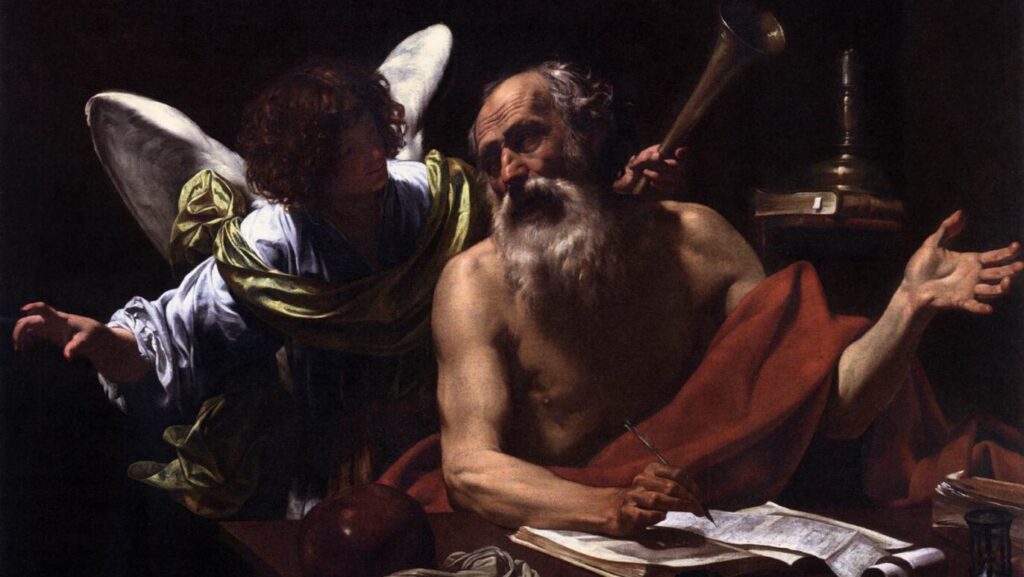
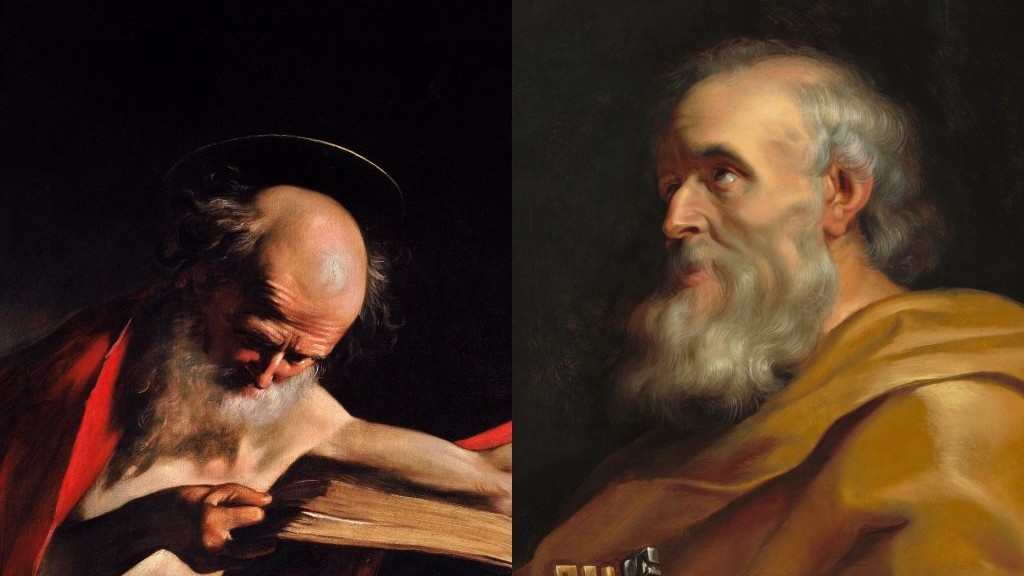
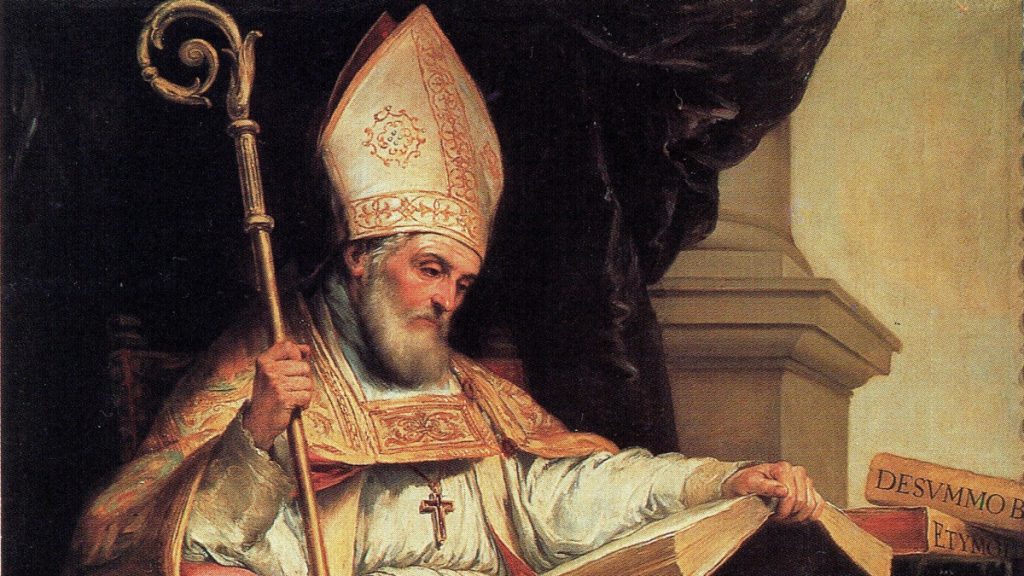
For this Eucharist Snapshot, we once more share with you words from St. Jerome (c. 342/347-420), who was arguably the greatest Scripture scholar of the patristic era. Popes and Saints consulted him on numerous occasions, such as St. Pope Damasus (who asked him to translate Scripture into Latin, which resulted in the Vulgate), and St. Augustine.
So it is significant that when he talks about the Eucharist throughout his works, St. Jerome does so in a strikingly Catholic way. His Homily 36 on the Psalms is no exception.
Roadmap
With that background in mind, our Roadmap is as follows:
- Our thesis is that St. Jerome’s Homily 36 on the Psalms (109/110) exemplifies a Catholic view of the Eucharist, and the priesthood by which it is offered. In modern versions of the Bible, the Psalm number is 110. We will show this by:
- Quoting and analyzing the relevant portion of the homily; then
- Summarizing the conclusions we believe can be reached.
St. Jerome, Homily 36 on the Psalms (109/110)
St. Jerome’s Homily 36 on the Psalms presents us with yet another example of Catholic theology of the Eucharist being on full display in the ancient Church. In this homily, St. Jerome is expounding Psalm 110, and in particular verse 4, which reads as follows (Ps. 110:4):
The Lord has sworn and will not change his mind, “You are a priest forever after the order of Melchizedek.”
Commenting on this verse, and particularly the words about the “order” of Melchizedek, St. Jerome says the following1:
“According to the order”: You will be priest in no wise according to the Jewish sacrifices, rather in the line of Melchizedek. Just as Melchizedek, the king of Salem, offered bread and wine [Gen. 14:18], even so shall You offer Your Body and Blood, true bread and true wine. This is our Melchizedek who gave us the divine sacrifice that we have. It is He who 274 | 275 said: “He who eats my flesh and drinks my blood” (John 6:55); according to the order of Melchizedek, He gave us His sacrament.
A few observations.
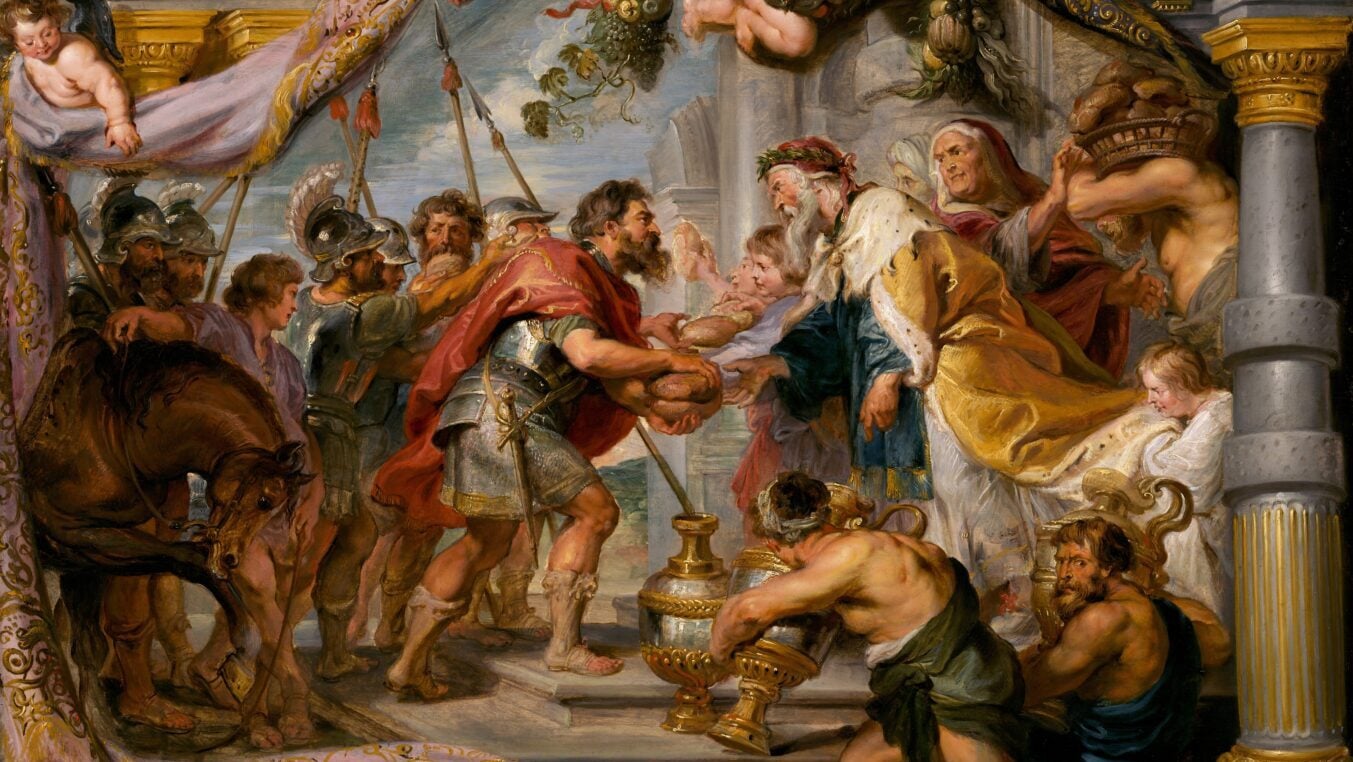
First, let’s review who Melchizedek was, namely, a mysterious, but deeply significant figure in the Scriptures. Only three books explicitly mention him—Genesis, Psalms, and Hebrews—but the references make it very clear that he is a type of Christ. The first reference in Genesis is very brief, and it comes from chapter 14. Abram—Abraham’s original name, before God re-named him in Genesis 17—has just won a military victory against multiple kings. After the victory, a mysterious Melchizedek, who is identified as “King of Salem” comes out to greet Abram amidst a meeting he is having with the kings he has defeated, in “the King’s Valley.” Not only is “Salem” the original name of Jerusalem, but Melchizedek is called both a “king” and the “priest of God Most High.” He also brings out “bread and wine” for a sacrifice, and offers his blessing to Abram (Gen. 14:19-20):
“Blessed be Abram by God Most High, maker of heaven and earth; 20 and blessed be God Most High, who has delivered your enemies into your hand!”
Abram responded by giving him “a tenth of everything” (v. 20). This “tenth” is the source of the word “tithe.”
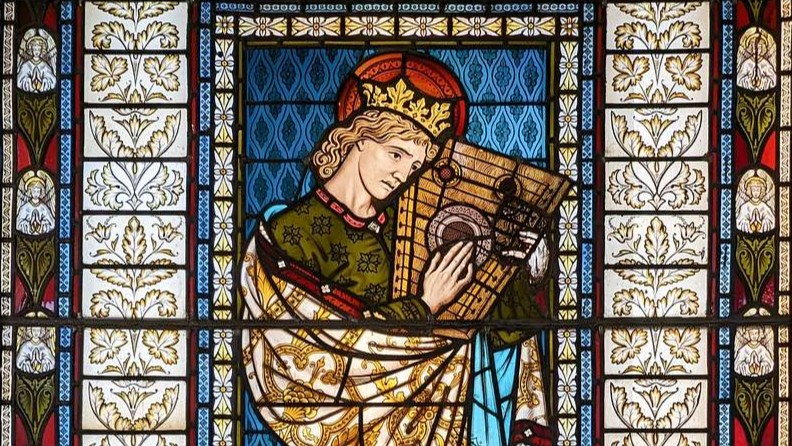
The next reference to Melchizedek is Psalm 110, the one being commented upon by St. Jerome. This Psalm likewise opens with a statement about God delivering victory over His enemies to His Messiah (Ps. 110:1):
The Lord says to my lord: “Sit at my right hand, till I make your enemies your footstool.”
This verse is quoted multiple times in the New Testament as a reference to Christ, and the same Psalm—as St. Jerome noted—speaks about this Messiah being a priest according to the order of Melchizedek. These are the only two references in the entire Old Testament to Melchizedek, who we do not hear about until the book of Hebrews.
While comprehensively exploring the topic of Melchizedek is beyond our scope, suffice it to say that Hebrews 7 shows how he was a type of the coming Christ more than any other part of Scripture. For example, it notes that Melchizedek was “without father or mother or genealogy, and has neither beginning of days nor end of life, but resembling the Son of God he continues a priest forever” (Heb. 7:3). The same chapter compares and contrasts the high priesthood of Christ according to Melchizedek with that of the Levitical priesthood established under Moses:
- Whereas the Levitical priests had a specific genealogy—they had to be descendants of Aaron, Moses’s brother—Melchizedek/Christ did not come from the tribe of Levi (i.e. we are told Christ comes from the tribe of Judah).
- Whereas the Israelites offered tithes to the Levites, the Levites themselves offered tithes to Melchizedek by virtue of being “still in the loins of his [Levi’s] ancestor [Abram] when Melchizedek met him” (Heb. 7:10).
- Whereas perfection was not attainable through the Levitical priesthood, it is attainable through the priesthood of Melchizedek/Christ (Heb. 7:19).
- Whereas the Levitical priesthood was based on bodily descent, the priesthood of Melchizedek/Christ is based on “the power of an indestructible life” (Heb. 7:16), which is how the New Testament interprets Psalm 110:4’s reference to the Messiah being a priest “forever after the order of Melchizedek.”
- Whereas the Levitical priesthood was superseded because of the law’s “weakness and uselessness,” the priesthood of Melchizedek/Christ was introduced so that we may “draw near to God” (Heb. 7:18, 19), indicating that “Jesus [is] the surety of a better covenant” (Heb. 7:22).
- Whereas the Levitical priesthood was not established by an oath from God, the priesthood of Melchizedek/Christ was, as indicated by the words “The Lord has sworn and will not change his mind” (Ps. 110:4).
- Whereas the Levitical priests (particularly the high priests) were numerous in number, died, and thus required lineal descendants in order to keep the priesthood alive, the priesthood of Melchizedek/Christ does not die (Heb. 7:23-24), for Christ lives forever.
- Whereas the Levitical priests had to offer daily sacrifices for both their own and the people’s sins, the priesthood of Melchizedek/Christ had no sins for which to offer sacrifice, and Christ had to offer His sacrifice only once and for all (Heb. 7:27).
These are among the many ways in which the book of Hebrews explains how Melchizedek was a type of Christ, and as such, a type of a priesthood that was superior to the former priesthood established under Moses.
We now have the context for understanding the profoundly Catholic nature of St. Jerome’s comments on Psalm 110. A few observations:
- He notes that Christ’s sacrifices are not “according to the Jewish sacrifices,” but rather those of Melchizedek.
- He asserts that Melchizedek’s sacrifice of bread and wine was the type of Christ’s sacrifice of “Your Body and Blood, true bread and true wine.”
- He calls this sacrifice of Christ a “divine sacrifice that we have.” In what sense does St. Jerome mean “we [i.e. Catholics] have” this sacrifice? He tells us very clearly: it is the sacrifice spoken of by Christ when He said “He who eats my flesh and drinks my blood” (John 6:55). As St. Jerome observed, it was “according to the order of Melchizedek [that] He gave us His sacrament.”
Thus, given that Scripture is clear that the priesthood of Melchizedek was superior to the Levitical priesthood, and that Christ is the fulfillment of Melchizedek, then we can be sure that the Eucharist instituted by Christ is no longer mere bread and wine, as offered by Melchizedek in Genesis. Rather, it is the Body and Blood of Christ itself, offered under the appearance of bread and wine. The fulfillment is, as always, greater than the type; the reality greater than the shadow.
Conclusion
We thus see that St. Jerome offers several very strikingly Catholic assertions about the Eucharist:
- It is the sacrifice of Christ that supersedes the Jewish sacrifices instituted under Moses.
- He calls this sacrifice “Your Body and Blood, true bread and true wine,” and “His sacrament,” offered to Catholics so that they may eat the flesh and drink the blood that Christ spoke about in John 6.
- Finally, he calls this sacrifice “divine.” It is not mere bread and wine, for that was the type offered in the Old Testament by Melchizedek. No, it is the typological fulfillment of the New Testament, and is thereby far greater: it is the Body and Blood of the Messiah, the “true bread and true wine,” a “divine” sacrifice given for Catholics to eat and drink.
All of these points taken together show St. Jerome had a profoundly Catholic view of the Eucharist which can be summed up in three terms: sacrifice, Real Presence, and divine.
 Buy Us a Coffee