Introduction
Despite the fact that the Ecumenical Council of Nicaea had definitively condemned Arianism in 325, the rest of the fourth century was riled by almost constant conflict between Catholics and Arians, with local councils of bishops in both the west and the east convening in order to take their stance either with or against Nicene orthodoxy.
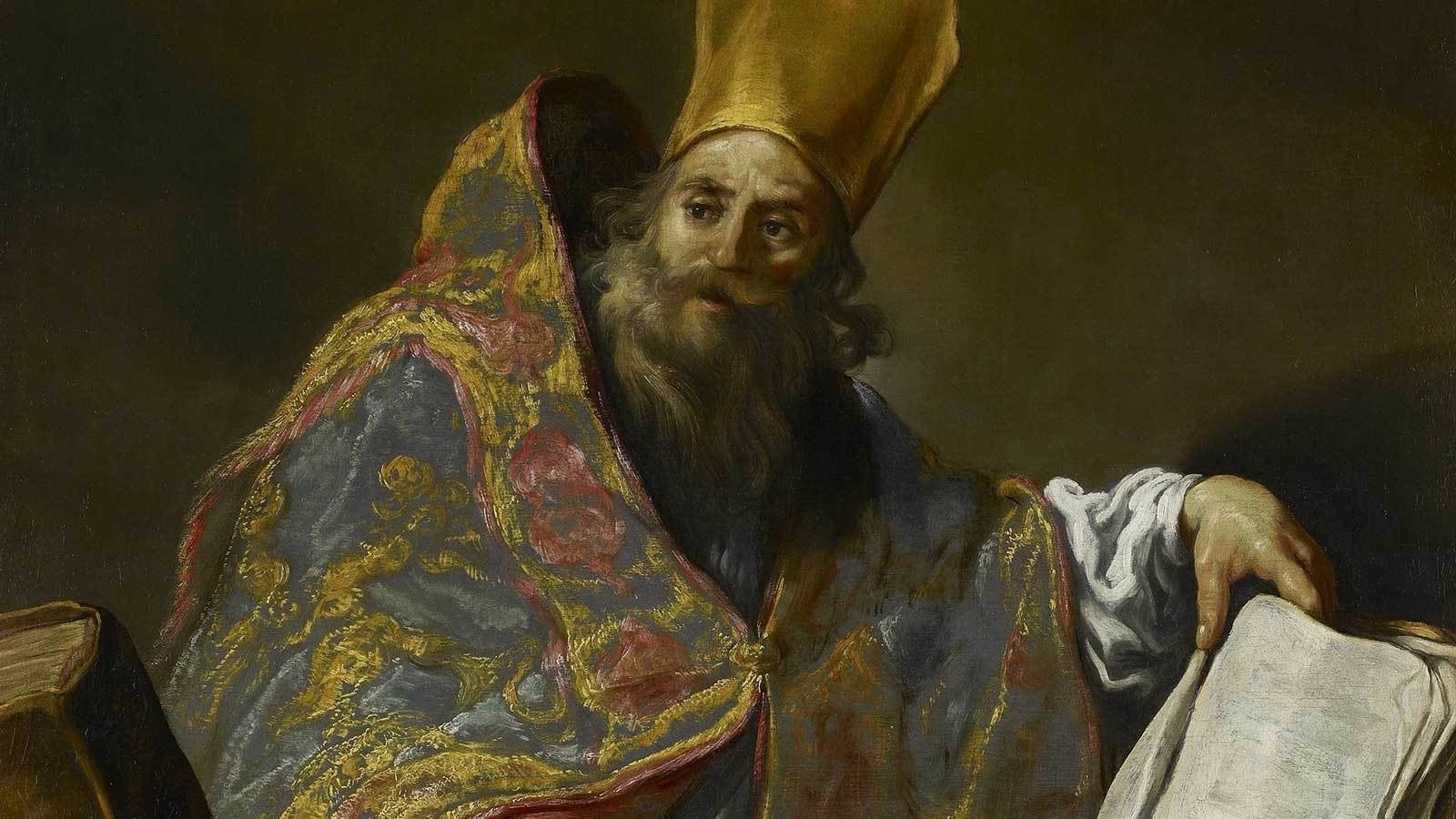
One such council was the Council of Aquileia in 381, which—while presided over by Valerian, bishop of Aquileia—was nonetheless organized and attended by St. Ambrose of Milan, who would go on to baptize and receive the future St. Augustine into the Catholic Church in 387.
As part of its efforts to combat Arianism, the Council of Aquileia requested each of the three emperors of the Roman Empire to intervene to protect St. Pope Damasus and the peace of the Roman Church against uproars caused by Ursinus, an antipope. Though brief, their letter on this subject (listed as Letter 11 in the collection of St. Ambrose’s letters) reveals a profoundly Catholic understanding of the papacy.
Roadmap
With that background in mind, our Roadmap is as follows:
- Our thesis is that St. Ambrose’s Letter 11, by affirming that the Roman Church was the center and source of Catholic communion, illustrates a Catholic understanding of the papacy. We will show this by:
- Providing some brief historical context;
- Quoting and analyzing the relevant portions of Letter 11; then
- Summarizing the conclusions we believe can be reached.
Historical Context
First, some historical context.
In 366, a violent schism erupted in Rome after the death of Pope Liberius. While the majority voted to elect Damasus as the next Pope, a rebellious minority consecrated then deacon Ursinus instead. When the conflict erupted into street violence, Ursinus was banished from Rome by civil authorities. For many years, he continued to conspire with Arian groups to undermine Damasus and regain the papal throne.
Ursinus’s agitation continued into 381, the year the Council of Aquileia convened. In response, the council wrote all three co-emperors of the empire: Gratian (senior emperor in the west), Valentinian II (junior emperor in the west), and Theodosius I (emperor in the east), asking them to ensure his activities could no longer disturb the Roman Church, whose essential role in Catholic communion was openly avowed.
This acknowledgement by the council of Rome’s central role in the Church is all the more relevant given that they addressed themselves not only to the western emperors, but the eastern one as well, requesting all of them to ensure the peace of the Roman Church was protected, for the sake of the Church everywhere. For them, the centrality of the Roman Church was thus not a merely “western” issue, but a matter of concern for the Catholic Church in every place.
The council’s letter—listed as Letter 11 in St. Ambrose’s collection of letters—is significant not only because it expresses the mind of the 32 bishops who attended, but especially because of the attendance of St. Ambrose himself, one of the great western Church Fathers.
Council of Aquileia and St. Ambrose of Milan, Letter 11 (September, 381)
Let us now proceed to Letter 11.1
The issue of antipope Ursinus comes up right at the beginning of the council’s letter (pg. 213):
There is another reason which distresses us more, which we had to treat when we assembled, lest it spread over the whole body of the Church scattered throughout the world, and thus throw everything into confusion. Although we generally agreed that [antipope] Ursinus could not have deceived your Piety…yet, that your holy mind and tranquility of soul, which delight in 213 |214 taking thought for all, may not be swayed by the false adulation of that unreasonable man, we think it right, if you condescendingly allow it, to pray and beseech you, not only to guard against future events, but also to be alarmed over that which has been achieved by his temerity. For, if he found any avenue for his boldness, what would he not put into confusion?
Note that the council considers the agitation of antipope Ursinus as a threat to the entire Church “scattered throughout the world,” capable of throwing “everything into confusion.” Hence their writing to all three co-emperors of the Roman Empire.
They continued as follows (pg. 214):
If pity for a single person can influence you, let the prayer of all the bishops move you much more. Who of us will be joined in fellowship with him, when he has tried to usurp a position not due to him, and to which he could not rightfully attain, and tries to regain most unreasonably what he has unreasonably sought?
Once more, the council indicates that the issue of antipope Ursinus concerns “all the bishops,” not just those of the west, once more tacitly indicating the centrality of the Roman Church to the Church as a whole.
The council then makes its most openly papal statement (pgs. 214-15):
Since it is written, “A factious man avoid after a first admonition” (Tit. 3:10), and since another who spoke by the Holy Spirit said that beasts of this sort should be spurned and not received without greeting or welcome [2 John 10], how can we not 214 | 215 judge the person whom we have seen united to their society to be also an exponent of disbelief? Even if he were not there, we would nevertheless have besought your Clemency not to allow disturbance to reach the Roman Church, head of the whole Roman world, and that sacred trust of the Apostles, whence flow all the rights of venerable communion upon all persons. We therefore beg and beseech you to deprive him of the means of stealing advantage from you.
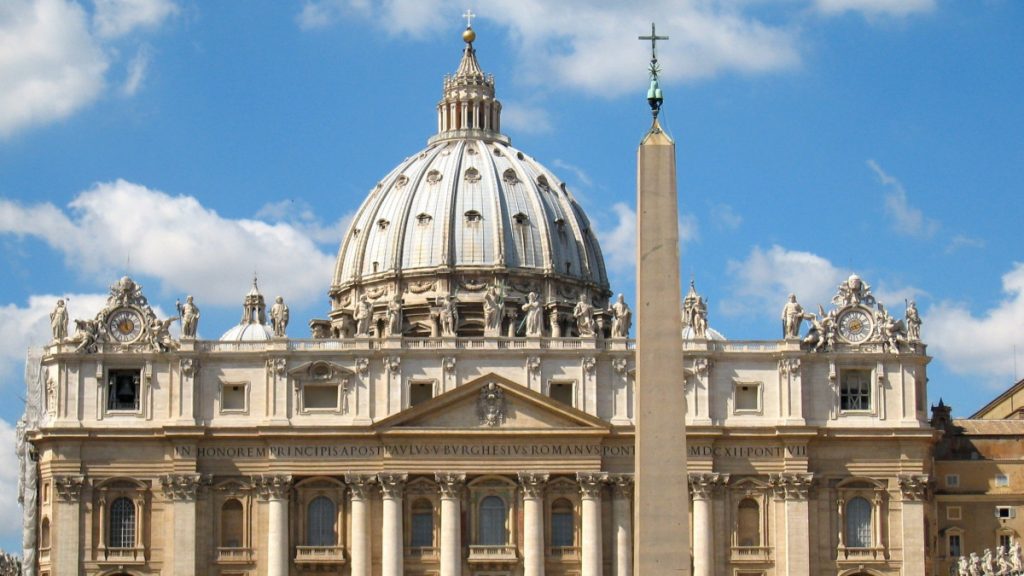
It is highly significant that, in a letter addressed to co-emperors east and west, the council declares the Roman Church the “head of the whole Roman world.” At this time, Rome was no longer even the capital of the western Roman Empire (at the time, it was Mediolanum, now known as Milan), despite its cultural importance. Similarly, the most powerful of the three co-emperors was Theodosius, who was in the east.
Thus, this assertion about the Roman Church by the Council of Aquileia was by definition not political, for the weight of political authority had long since vacated the city of Rome itself. It could only be theological, which is made all the clearer by the very next line, namely, that Rome is the head of “that sacred trust of the Apostles, whence flow all the rights of venerable communion upon all persons.” This is by far the most significant line, as it declares that Rome is the source of communion in the entire Catholic Church. While we don’t want to overread the letter, it likewise seems significant that this communion is said to attach to persons, not simply other individual local churches. The only logical conclusion is that Rome’s position as the source of communion extended not merely to other churches, but to individual persons themselves.
The council concluded as follows (pg. 215):
We therefore beg that through the removal of this very troublesome person you will restore peace to us bishops and to the Roman people whose security has been interrupted and whose condition at present keeps them in uncertainty and suspense…
Once again, the Council of Aquileia speaks about the issue with antipope Ursinus and the peace of the Roman Church as a matter of concern for all the bishops. It is not merely western, and certainly not confined to the city of Rome. It has universal, or “catholic,” implications.
Conclusion
In conclusion, this short letter from a council of bishops to all the emperors of the Roman Empire contains several revealing treasures about Catholic belief in the papacy in the ancient Church:
- The peace of the Roman Church, and tumults caused by antipopes, are of concern to the entire Church, east and west, particularly the bishops.
- This concern stems from the fact that the Roman Church is “head of the whole Roman world, and that sacred trust of the Apostles, whence flow all the rights of venerable communion upon all persons.”
In short, the bishops of the Council of Aquileia—including the Church Father, St. Ambrose—believed the Roman Church is the source and center of all Catholic communion in Christ’s Church. Their beliefs remain Catholic belief to this very day.
 Buy Us a Coffee