(Updated December 12, 2025)
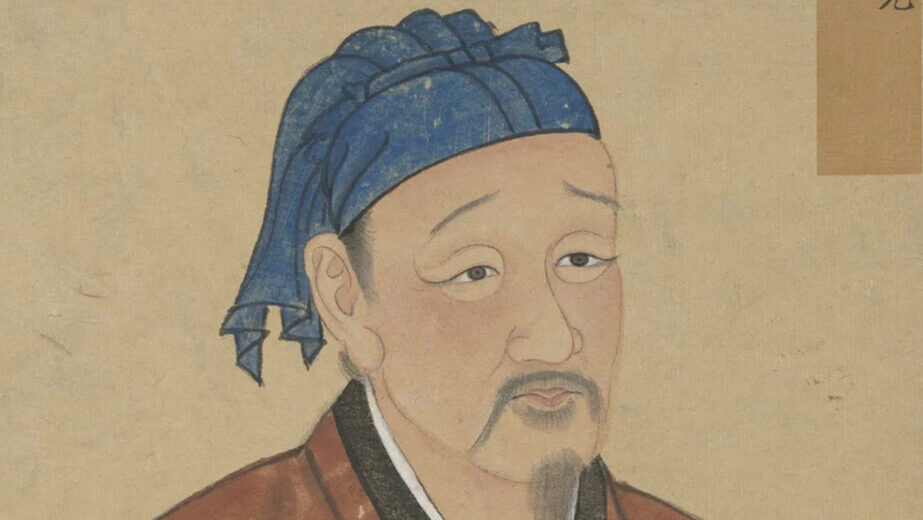
Xunzi (c. 310-after 238 BC) was a Chinese Confucian philosopher, considered by many to be the third greatest such thinker, after Confucius himself, and Mencius. Many of his great insights are compatible with those of the classical western world (Greece and Rome), as well as the philosophical and moral teachings of the Catholic Church.
Next to each quote are the Topic Quote Archives in which they are included. Commentary from Joshua Charles is in bold red.
This Quote Archive is being continuously updated as research continues. Quotes marked with “***” have not yet been organized into their respective Topic Quote Archives.
Books
Xunzi
- The Ancients on Music | Ch. 20: Discourse on Music
(Ch. 1: Encouraging Learning)1 ***
The noble person says: Learning just never cease…The noble person who studies widely and examines himself each day will become clear in his knowing and faultless in his conduct…
[A]nd if you do not hear the words handed down from the ancient kings, you will not know the greatness of learning and inquiry. The children of Han and Yue and of the Yi and the Mo all make the same sounds at birth, but as they grow up they have different customs because this is the way they have been educated. The Ode says,
O you noble men,
Do not be constantly at ease and at rest.
Be thoughtful in your official positions.
Love those who are upright and correct.
And the spirits will heed you,
And will increase your blessings. See Proverbs.Of spirits there is none greater than being transformed through the Way; of blessings there is none more lasting than being without misfortune. 161 | 162 The earliest Christians were said to hold to “the Way.” See Acts 9:2; 19:9, 23; 24:14, 22; etc. Jesus calls Himself “the way, the truth, and the life.” (See John 15:6) C.S. Lewis calls this what the Chinese term for “the Way” is, namely the Tao. See Lewis’ The Tao.
Once I spent an entire day in thought, but it was not as good as a moment of study…The noble person is by birth no different from others, but he is good at borrowing from external things… Notice that obtaining wisdom is not primarily a matter of looking inward, but outward. We do not grow wise by looking first at ourselves. “The fear of the Lord is the beginning of wisdom, and the knowledge of the Holy One is insight” (Prov. 9:10).
Therefore the noble person will choose with care the place where he will reside, and will be accompanied by scholars when he travels. In this way he avoids depravity and meanness and approaches centrality and correctness.
Accumulate earth to make a mountain, and wind and rain will flourish there. Accumulate water to make a deep pool, and dragons will be born from it. Accumulate goodness to create virtue, and spiritual clarity will naturally be acquired; there the mind of the sage will be fully realized. Thus if you do not accumulate little steps, you will not have the means to journey a thousand li, and if you do not pile up small streams, you will have no way to fill a river or a sea. Though a thoroughbred like Qiji cannot cover ten paces in one leap, the sorriest nag can do it in ten yokings. Achievement consists of never giving up.
If you start carving, and then give up, you cannot even cut through a piece of rotten wood; but if you persist without stopping, you can carve and inlay metal or stone. Earthworms lack the power of sharp claws or teeth, or strong muscles or bones, yet above ground they feast on the mud, and below they drink 162 | 163 at the yellow springs. This is because they keep their minds on one thing. Crabs have six legs and two pincers, but unless they can find an empty hole dug by a snake or a water serpent, they have no place to lodge. This is because they allow their minds to go off in all directions. Thus if there is no dark and dogged will, there will be no bright and shining clarity; if there is no dull and determined effort, there will be no brilliant and glorious achievement. One who travels two roads at once will arrive nowhere; one who serves two masters will please neither… See the words of Jesus in Matt. 6:24 and Luke 16:13.
The learning of the noble person enters his ear, is stored in his mind, spreads through his four limbs, and is made visible in his activity and his tranquility. In his smallest word, in his slightest movement, in everything, he may be taken as a model and a standard. The learning of the lesser man enters his ear and comes out his mouth. With only four inches between ear and mouth, how can he possess it long enough to beautify a seven-foot body? In antiquity learning was carried on for the sake of one’s self; today learning is carried on for the sake of others. The learning of the noble person is for the sake of beautifying himself; the learning of the lesser man is offering bird and beast [to win attention from others]. Thus to proffer information when you have not been asked for it is called officiousness; to proffer information on two questions when you have only been asked about one is garrulity. Officiousness is to be condemned, so too is garrulity. The noble person is like an echo. See St. James’ warnings about the tongue in James 3.
In learning nothing works so well as to be near a person of learning…But following alongside a person of learning and repeating the explanation of the noble person bring one honor everywhere and allow one comprehensive knowledge of the world. Therefore it is said that “In learning nothing works so well as to be near a person of learning.” We must all have our “rabbi”—our discipler, our mentor, our friend who loves enough to say “you are screwing up.”
In the course of learning there is nothing more expedient than to devote yourself to a person of learning, and next to this is to pay homage to the rites. If you can neither devote yourself to a person of learning nor pay homage to the rites, how will you do anything more than learn randomly or passively follow the Odes and the Documents? In this case you will never to the end of your days escape from being merely a vulgar scholar. If you would take the ancient kings as your source and humaneness and rightness as your foundation, then rites are the means of correctly ordering warp and woof, pathways and byways… 163 | 164
[O]ne who does not take the last half step in a journey of a thousand li does not deserve to be called a good carriage driver; one who does not comprehend moral relationships and categories and does not become one with humanness and rightness does not deserve to be called good in learning. Surely learning is learning to unify oneself…Complete it, realize it to the fullest—only then will you be learned. “No dream is worth giving only half of your heart to.” Beginnings don’t matter at all. Endings are all that matter.
The noble person knows that what is not complete or what is not pure is unworthy to be called beautiful. Therefore he recites and reiterates so as to integrate it, reflects and ponders so as to comprehend it, determines his associations so that he may dwell in it, and eliminates what is harmful in order to preserve and nourish it. He causes his eyes to be devoid of any desire to see what is not right, his ears to be devoid of any desire to hear what is not right, his mouth to be devoid of any desire to say what is not right, and his mind to be devoid of any desire to think what is not right. Having arrived at this, he takes utmost pleasure in it. His eyes will take greater pleasure in it than in the five colors; his ears will take greater pleasure in it than in the five sounds; his mouth will take greater pleasure in it than in the five flavors; and his mind will benefit more from it than from possession of the world.
Therefore he cannot be subverted by power or profit, nor swayed by the masses and multitudes, nor unsettled by the whole world. He follows this in life; he follows it in death—this is what is called holding firm to inner power. He who holds firm to inner power is able to order himself; being able to order himself, he can then respond to others. He who is able to order himself and respond to others is called the complete man. Heaven manifests itself in its brightness; earth manifests itself in its breadth; the noble person values his completeness. This seems to align with the Catholic idea of developing virtue, and the reason why God gave us a conscience, what Xunzi calls “inner power,” which is not itself sufficient, but must be held to.
(Ch. 20: Discourse on Music)2
Music is joy, an unavoidable human disposition. So, people cannot be without music; if they feel joy, they must express it in sound and give it shape in movement. The way of human beings is such that changes in the motions of their nature are completely contained in these sounds and movements. So, people cannot be without joy, and their joy cannot be without shape, but if it takes shape and does not accord with the Way, then there will inevitably be chaos. The former kings hated such chaos, and therefore they established the sounds of the Ya and the Song [sections of the Odes] in order to guide them. They caused the sounds to be enjoyable without becoming dissolute. They caused the patterns to be distinctive without becoming degenerate. They caused the progression, complexity, intensity, and rhythm of the music to be sufficient to move the goodness in people’s hearts. They caused perverse and corrupt qi to have no place to attach itself to them. This is the manner in which the former kings created music…
And so, when music is performed in the ancestral temple and the ruler and ministers, superiors and inferiors, listen to it together, none fail to become harmoniously respectful. When it is performed within the home and father and sons, elder and younger brothers listen to it together, none fail to become harmoniously affectionate. And when it is performed in the village, and old and young people listen to it together, none fail to become harmoniously cooperative. Thus, music observes a single standard in order to fix its harmony, it brings together different instruments in order to ornament its rhythm, and it combines their playing in order to achieve a beautiful pattern. It is sufficient to lead people in a single, unified way, and is sufficient to bring order to the myriad changes within them. This is the method by which the former kings created music…
Thus, in listening to the sounds of the Ya and Song, people’s thoughts and intentions are broadened… 218 | 219 Hence music brings great uniformity to all under Heaven. It is the key to balance and harmony and something that the dispositions of human beings cannot avoid. This is the method by which the former kings created their music…
Moreover, music is the means by which the former kings adorned their happiness…Therefore, when they were happy, all under Heaven harmonized with them, and when they were angry, then violent and disorderly people feared them. Ritual and music are precisely the height of the way followed by the former kings…
Sounds and music enter into people deeply and transform people quickly. Therefore, the former kings carefully made for these things a proper pattern. If music is balanced and peaceful, then the people will be harmonious and not dissolute. If music is solemn and majestic, then the people will be uniformly ordered and not cause chaos. When the people are harmonious and uniformly ordered, then the state’s soldiers will be vigorous, and its fortifications will be solid, and rival states will not dare to touch it. When the situation is like this, then the common people will all rest secure in their dwellings and delight in their villages, such as to provide sufficiently for their superior. Then their superior’s fame will be clear, his glory will be great, and all the people within the four seas will want to have him as their governor. This is the beginning of being a true king.
If music is dissolute and dangerous, then the people will be dissolute, arrogant, vulgar, and base. If they are dissolute and arrogant then they will cause chaos. If they are vulgar and base then they will struggle with each other. If they cause chaos and struggle with each 219 | 220 other, then the state’s soldiers will be weak and its fortifications vulnerable, and rival state will put them in danger. When the situation is like this, then the common people will not rest secure in their dwellings and not delight in their villages, and will not provide sufficiently for their superior. And so when ritual and music are discarded and deviant tunes arise, this is the root cause for the superior being endangered, disgraced, and having his territory diminished. Thus the former kings valued ritual and music and considered deviant tunes base…The work of the Music Master is to cultivate government regulations and orders, to keep watch over poetry and artistic form, to prohibit perverse music, and to smoothly cultivate these tasks at the appropriate times, so as to prevent barbarian, vulgar, and deviant tunes from daring to disorder the refined pieces…
Music is something in which the sages delighted, for it has the power to make good the hearts of the people, to influence men deeply, and to reform their manners and customs with facility. Therefore, the former kings guided the people with ritual and music, and the people became harmonious and congenial. For the people have dispositions to like and dislike things, but if they are allowed no happy or angry reactions, then there will be chaos. The former kings hated this chaos, and so they cultivated their conduct and set in order their music, and all under Heaven became peacefully compliant by these things…
Dissolute customs and tunes of Zheng and Wey make people’s hearts licentious…And so, the gentleman’s ears will not listen to licentious sounds. His eyes will not look upon seductive sights. His mouth will not issue foul doctrines. These three are things that the gentleman is careful about.
Whenever wanton sounds arouse a persons, a perverse qi responds to them from within. When this perverse qi takes form, then chaos results from it. But when proper sounds arouse a person, a compliant qi responds to them from within. When this compliant qi takes form, then good order results from it….Therefore, the gentleman is careful about what he rejects and what he draws near to. 220 | 221
The gentleman guides his intentions with bells and drums…And so, his purity resembles Heaven, his broadness resembles the Earth, and the way he postures and resolves has resemblance to the four seasons.
Thus:
When music is played, intentions gain purity.
When rites are studied, conduct turns out perfectly.
They make one’s ears acute and they make one’s eyes sharp;
They give one’s blood and qi balance and harmony;
They modify customs and they alter habits,
So all the people in the world live peaceably.
And those who are good and fine delight in each other.And so I say: Music is joy. The gentleman takes joy in attaining the Way. The petty man takes joy in attaining the object of his desires. If one takes the Way to regulate one’s desires, then one will be happy and not disordered. If one forgets the Way for the sake of one’s desires, then one will be confused and unhappy. And so music is the means to guide one’s joy…When music proceeds, then the people will turn toward what is correct. Thus, music is the height of ordering people…
Music, moreover, is unchanging harmony, and ritual is unalterable order. Music unites that which is the same, and ritual distinguishes that which is different. Together the combination of ritual and music governs the human heart.
To penetrate to the root and encompass all change—this is the essential disposition of music. To make clear integrity and do away with pretense—this is the guiding principle of ritual…[T]he enlightened kings have passed away, and so no one corrects them. Foolish people study his ways and so endanger themselves. The gentleman clearly understands the value of music, and this is his virtue. Yet, a chaotic age hates what is good, and so will not heed him. Alas, how sad! He cannot Succeed. You disciples must work hard at your studies and not be confused… 221 | 223
These five kinds of conduct—differentiating noble and lowly, distinguishing exalted and lesser, gathering in harmony and joy without becoming dissolute, treating appropriately junior and senior without leaving anyone out, and enjoying comfort and relaxation without becoming disorderly—these are sufficient to rectify one’s person and to settle the state. And when the state is settled, then all under Heaven will become settled. Hence I say: when I observe the village drinking ceremony, I know how easy and carefree the way of a true king is.
The signs of a disordered age are these: Men’s clothing is elaborately woven. Their appearances are womanish. Their customs are licentious. Their intentions are set on profit. Their conduct is irregular. Their sounds and music are dangerous. Their emblems and insignias are deviant and ostentatious. The way they nurture the living lacks all proper measure. The way they send off the dead is stingy and Mohist. They denigrate ritual and yi, while valuing boldness and strength. When impoverished, they rob others. When wealthy, they become utter villains.
An ordered age is the opposite of all this.
Footnotes
- WM. Theodore de Bary, Irene Bloom, eds., Volume One: Sources of Chinese Tradition from Earliest Times to 1600, 2nd ed. (New York: Columbia University Press, 1999), 161-63, 164. ↩︎
- Xunzi, Eric L. Hutton, trans., Xunzi: The Complete Text (Princeton: Princeton University Press, 2016), 218-21, 223. ↩︎
 Buy Us a Coffee