Introduction: By Whose Authority?
On a practical level, the core dispute between the Catholic Church and protestants resolves around one question: did Christ establish a Church with binding authority to teach in His name? Catholics say “yes.” Protestants say “no.” Even the most “high church” protestants could not agree that the church has authority to render judgment in God’s name, because if it did, such a Church could not teach error (since God cannot lie). Thus, the furthest they can go is a church that renders merely human judgment on divine questions.
However, not only is this idea foreign to the history of Christianity, it is foreign to the Bible. This was one of the key realizations that led to my conversion to the Catholic Faith from protestantism.
Virtually every form of protestantism I knew of put man’s authority and God’s authority in two separate boxes, as if they could never overlap (i.e. with respect to teaching binding articles of faith). But I saw that the Bible we protestants so often appealed to did no such thing (I wrote about this extensively in #12 | Why Acts 15 Led Me to the Catholic Church). In fact, quite the opposite: Scripture was full of examples of God’s authority being exercised by human agents to whom He had imparted it. The deeper I dug, the more I discovered that the Catholic notion of authority had very Jewish roots, which shed a great deal of light on the many places in the New Testament when Christ and the Apostles delegated authority to others. These Jewish roots were not surprising when I recalled St. Paul’s reminder that “whatever was written in former days was written for our instruction” (Rom. 15:4). Indeed, the Old Testament is deeply instructive on the topic of how God exercises His authority among His people, guiding us in our understanding of how authority is exercised under the New Testament.
Roadmap
With that background in mind, our Roadmap is as follows:
- Our thesis is that the Catholic claim of divinely commissioned authority to teach the world the Christian faith has deeply biblical roots in the Old Testament, in particular the establishment of Moses and the Aaronic priesthood with the authority to speak for God and teach the Israelites His Torah. We will show this by:
- Defining what we mean by “infallible” for the purpose of this article; then
- Examining God’s commissioning of Moses to lead and teach His people; then
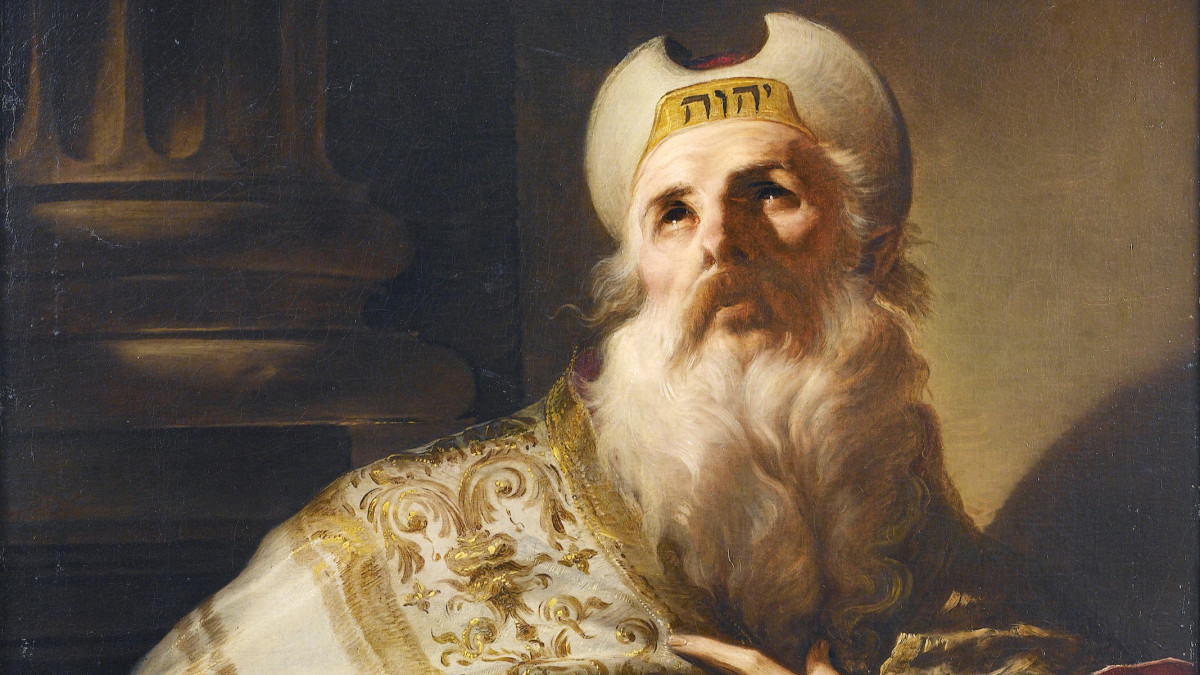
- Examining God’s establishment of the Aaronic priesthood with authority to speak in His name; then
- We will summarize the conclusions we believe are justified by this biblical evidence.
Infallible = Speaking for God with God’s Authority
The Catholic Church claims to possess infallible authority from God to teach the Christian Faith. For the purpose of this series of articles, “infallible” simply means “the authority to teach in God’s name.” The philosophical implications of this—that it necessarily implies an authority that teaches without error, etc.—will be examined elsewhere. Likewise, I will not address the details of Catholic theology on infallibility, or the specifics of the papacy, as these will also be addressed elsewhere.
Our only concern in this series is to offer evidence that the roots of this Catholic assertion are profoundly Jewish. Far from being unbiblical, the idea that there are certain offices and men who have been delegated by God to speak and govern His people in His name and with His authority is deeply biblical.
God Commissions Moses to Liberate and Teach His People
Other than Christ, the preeminent example of God using men to authoritatively teach and govern His people is Moses.
After God appears to Moses in the burning bush, He commissions him to liberate His people from slavery in Egypt. Moses objects that he is “slow of speech and of tongue” (Ex. 4:10). But God is clear that this will not interfere with how He will use him. “Now therefore go,” He says, “and I will be with your mouth and teach you what you shall speak” (Ex. 4:12). Moses again begs God to send another. God does not comply with Moses’s request, but instead declares He will provide Moses a helper, namely his brother Aaron. What God says next is revealing (Ex. 4:15-16):
15 And you [Moses] shall speak to him [Aaron] and put the words in his mouth; and I will be with your mouth and with his mouth, and will teach you what you shall do. 16 He shall speak for you to the people; and he shall be a mouth for you, and you shall be to him as God.
Thus, in God’s commissioning of Moses with a portion of His own authority, we clearly see that it is no affront to God to claim that a man may exercise His authority to teach. So intimately did God associate Himself with Moses (and secondarily Aaron) that He promised active assistance to them both, and even commanded that Aaron submit to Moses as if he was God! He would then teach the people on Moses’s behalf.
The rest of the book of Exodus is full of examples of God directly using Moses to speak with His authority to the people of Israel, Pharaoh, and the like.
God Establishes the Priesthood to Speak in His Name
But God did not restrict the exercise of such authority to an event as unique and singular as the Exodus. Rather, He established a leadership structure that would govern His people with His authority on an ongoing basis–even after Moses and Aaron were dead.
In the early days of the Israelites’ Exodus after crossing the Red Sea, Moses ruled the people of Israel (Ex. 18:13):
On the morrow Moses sat to judge the people, and the people stood about Moses from morning till evening.
But when his father-in-law, Jethro, saw how exhausting it was for Moses to govern in this fashion, he asked him what he was doing. Moses asserted he was judging the people with God’s authority (Ex. 18:15-16):
15 And Moses said to his father-in-law, “Because the people come to me to inquire of God; 16 when they have a dispute, they come to me and I decide between a man and his neighbor, and I make them know the statutes of God and his decisions.”
Note, this was before the Israelites arrived at Mount Sinai and received the law. It’s interesting to note here that Moses seems to be exercising the same basic function of teaching and judging referred to by Christ when He spoke of the Pharisees sitting on “Moses’s seat” (Matt. 23:2-3):
2 “The scribes and the Pharisees sit on Moses’s seat; 3 so practice and observe whatever they tell you, but not what they do; for they preach, but do not practice.
Not only did the Israelites approach Moses expecting to hear God’s answer, but Moses himself understood the purpose of his own authority to be not only to teach them “the statutes of God,” but to render “his [God’s] decisions” in their disputes. Christ had no problem citing this to His followers when it came to the religious leadership of His own day, corrupt as they were. Again, we see in Scripture that there is no intrinsic problem with the idea of a man exercising God’s authority among men in binding fashion. God remains ultimately sovereign. But what I saw repeated examples of through Scripture was that His authority was in no way threatened by His delegation of a portion of it to human agents.
In response to Moses, and seeing how overwhelmed he was, Jethro offered him a suggestion (Ex. 18:17-23):
17 Moses’ father-in-law said to him, “What you are doing is not good. 18 You and the people with you will wear yourselves out, for the thing is too heavy for you; you are not able to perform it alone. 19 Listen now to my voice; I will give you counsel, and God be with you! You shall represent the people before God, and bring their cases to God; 20 and you shall teach them the statutes and the decisions, and make them know the way in which they must walk and what they must do. 21 Moreover choose able men from all the people, such as fear God, men who are trustworthy and who hate a bribe; and place such men over the people as rulers of thousands, of hundreds, of fifties, and of tens. 22 And let them judge the people at all times; every great matter they shall bring to you, but any small matter they shall decide themselves; so it will be easier for you, and they will bear the burden with you. 23 If you do this, and God so commands you, then you will be able to endure, and all this people also will go to their place in peace.”
Moses “gave heed to the voice of his father-in-law and did all that he had said” (Ex. 18:24). He appointed the various leaders, and they “judged the people at all times; hard cases they brought to Moses, but any small matter they decided themselves” (Ex. 18:26).
Jethro, in offering his advice to Moses, implicitly accepted that Moses ruled with God’s authority when he qualified that advice by saying, “If you do this, and God so commands you…” (Ex. 18:23). While Jethro believed his advice was sound, he ultimately left it to Moses to determine whether such advice came from God, or from just a man. Moses’s subsequent actions showed that he concluded Jethro’s advice was indeed from God (Ex. 18:24-26):
24 So Moses gave heed to the voice of his father-in-law and did all that he had said. 25 Moses chose able men out of all Israel, and made them heads over the people, rulers of thousands, of hundreds, of fifties, and of tens. 26 And they judged the people at all times; hard cases they brought to Moses, but any small matter they decided themselves.
Ensuring the Continuity of the Priesthood (Deuteronomy 17)
But what about after Moses was dead and gone? God provided for that eventuality quite explicitly in Deuteronomy, where the authority of the priesthood to judge in disputes about the Torah was affirmed in the strongest fashion (Deut. 17:8-13):
8 “If any case arises requiring decision between one kind of homicide and another, one kind of legal right and another, or one kind of assault and another, any case within your towns which is too difficult for you, then you shall arise and go up to the place which the Lord your God will choose, 9 and coming to the Levitical priests, and to the judge who is in office in those days, you shall consult them, and they shall declare to you the decision. 10 Then you shall do according to what they declare to you from that place which the Lord will choose; and you shall be careful to do according to all that they direct you; 11 according to the instructions which they give you, and according to the decision which they pronounce to you, you shall do; you shall not turn aside from the verdict which they declare to you, either to the right hand or to the left. 12 The man who acts presumptuously, by not obeying the priest who stands to minister there before the Lord your God, or the judge, that man shall die; so you shall purge the evil from Israel. 13 And all the people shall hear, and fear, and not act presumptuously again.
In addition to authority to judge disputes about the Torah, God also gave the authority to punish those who did not obey with execution. In the context of murder cases, the role of the priesthood is once more affirmed in very clear terms (Deut. 21:5):
5 And the priests the sons of Levi shall come forward, for the Lord your God has chosen them to minister to him and to bless in the name of the Lord, and by their word every dispute and every assault shall be settled.
Likewise, in his final blessing, Moses once more affirms the authority of the priesthood by including the following words in his blessing of the Tribe of Levi, the priestly tribe (Deut. 33:10):
They shall teach Jacob thy ordinances, and Israel thy law; they shall put incense before thee, and whole burnt offering upon thy altar.
Not only did God govern His people through Moses personally, but He established a hierarchical authority by which to govern His people in perpetuity—prior to giving the Torah, within the Torah itself, and after Moses and his generation were long gone. This authority would render judgment in His name, and those who did not accept it as such would be executed. In other words, the very same divine authority by which Moses judged the people would remain available to every generation of Israelites long after he was gone.
After God clearly the authority of the priesthood to judge in matters of dispute in the first part of Deuteronomy 17, in the same chapter, He then anticipates the establishment of the Israelite monarchy (which would not occur for many centuries), and commands that the king himself shall be subject to the same Torah as everyone else, under the same authority of the priesthood (Deut. 17:14-15, 18-20):
14 “When you come to the land which the Lord your God gives you, and you possess it and dwell in it, and then say, ‘I will set a king over me, like all the nations that are round about me’; 15 you may indeed set as king over you him whom the Lord your God will choose…
18 “And when he sits on the throne of his kingdom, he shall write for himself in a book a copy of this law, from that which is in charge of the Levitical priests; 19 and it shall be with him, and he shall read in it all the days of his life, that he may learn to fear the Lord his God, by keeping all the words of this law and these statutes, and doing them; 20 that his heart may not be lifted up above his brethren, and that he may not turn aside from the commandment, either to the right hand or to the left; so that he may continue long in his kingdom, he and his children, in Israel.
Thus, the king himself was bound to obey the Torah, which included provisions for obeying the priesthood. Indeed, one of Judah’s great reforming monarchs, King Jehoshaphat, applied this exact model in his reforms. Even more fascinating, he distinguished between priestly and kingly authority in precisely the same manner as the Catholic Church would later do so with Her “Two Swords” doctrine (2 Chron. 19:8-11):
8 Moreover in Jerusalem Jehoshaphat appointed certain Levites and priests and heads of families of Israel, to give judgment for the Lord and to decide disputed cases. They had their seat at Jerusalem. 9 And he charged them: “Thus you shall do in the fear of the Lord, in faithfulness, and with your whole heart: 10 whenever a case comes to you from your brethren who live in their cities, concerning bloodshed, law or commandment, statutes or ordinances, then you shall instruct them, that they may not incur guilt before the Lord and wrath may not come upon you and your brethren. Thus you shall do, and you will not incur guilt. 11 And behold, Amariah the chief priest is over you in all matters of the Lord; and Zebadiah the son of Ishmael, the governor of the house of Judah, in all the king’s matters; and the Levites will serve you as officers. Deal courageously, and may the Lord be with the upright!”
Likewise, when the people returned from exile in Babylon, Ezra the priest gathered the people, and he and other priests began to exercise their priestly authority to teach the Scriptures to them (Neh. 8:4-12):
4 And Ezra the scribe stood on a wooden pulpit which they had made for the purpose; and beside him stood Mattithiah, Shema, Anaiah, Uriah, Hilkiah, and Maaseiah on his right hand; and Pedaiah, Mishael, Malchijah, Hashum, Hashbaddanah, Zechariah, and Meshullam on his left hand. 5 And Ezra opened the book in the sight of all the people, for he was above all the people; and when he opened it all the people stood. 6 And Ezra blessed the Lord, the great God; and all the people answered, “Amen, Amen,” lifting up their hands; and they bowed their heads and worshiped the Lord with their faces to the ground. 7 Also Jeshua, Bani, Sherebiah, Jamin, Akkub, Shabbethai, Hodiah, Maaseiah, Kelita, Azariah, Jozabad, Hanan, Pelaiah, the Levites, helped the people to understand the law, while the people remained in their places. 8 And they read from the book, from the law of God, clearly; and they gave the sense, so that the people understood the reading.
9 And Nehemiah, who was the governor, and Ezra the priest and scribe, and the Levites who taught the people said to all the people, “This day is holy to the Lord your God; do not mourn or weep.” For all the people wept when they heard the words of the law. 10 Then he said to them, “Go your way, eat the fat and drink sweet wine and send portions to him for whom nothing is prepared; for this day is holy to our Lord; and do not be grieved, for the joy of the Lord is your strength.” 11 So the Levites stilled all the people, saying, “Be quiet, for this day is holy; do not be grieved.” 12 And all the people went their way to eat and drink and to send portions and to make great rejoicing, because they had understood the words that were declared to them.
Conclusion
Thus, in God’s dealings with Moses and the Old Testament priesthood, we see a few basic facts:
- God did not believe that men exercising His authority among men was an affront to either Him, or to the authority of the written law (the Scriptures).
- God ordained Moses and the priesthood to interpret and execute the law, and to do so with His authority—no sola scriptura for the Israelites!
- God ensured that this same authority would continue after the death of Moses, Aaron, and the first generation of priests through succession. This reality looks quite similar to the principle of apostolic succession, the Catholic doctrine that the authority of the Apostles to teach, govern, and sanctify the Church has been transmitted from the first century to the present day through their successors, the bishops, and will continue to do so until Christ’s return.
It became clear to me that protestant assertions that men could never bind other men’s consciences with God’s authority, indeed that such a thing was abhorrent to God and unbiblical, were simply not true. Not only was it not true, but such authority was the normative means by which God had governed His people from the beginning.
 Buy Us a Coffee