(Updated December 21, 2025)
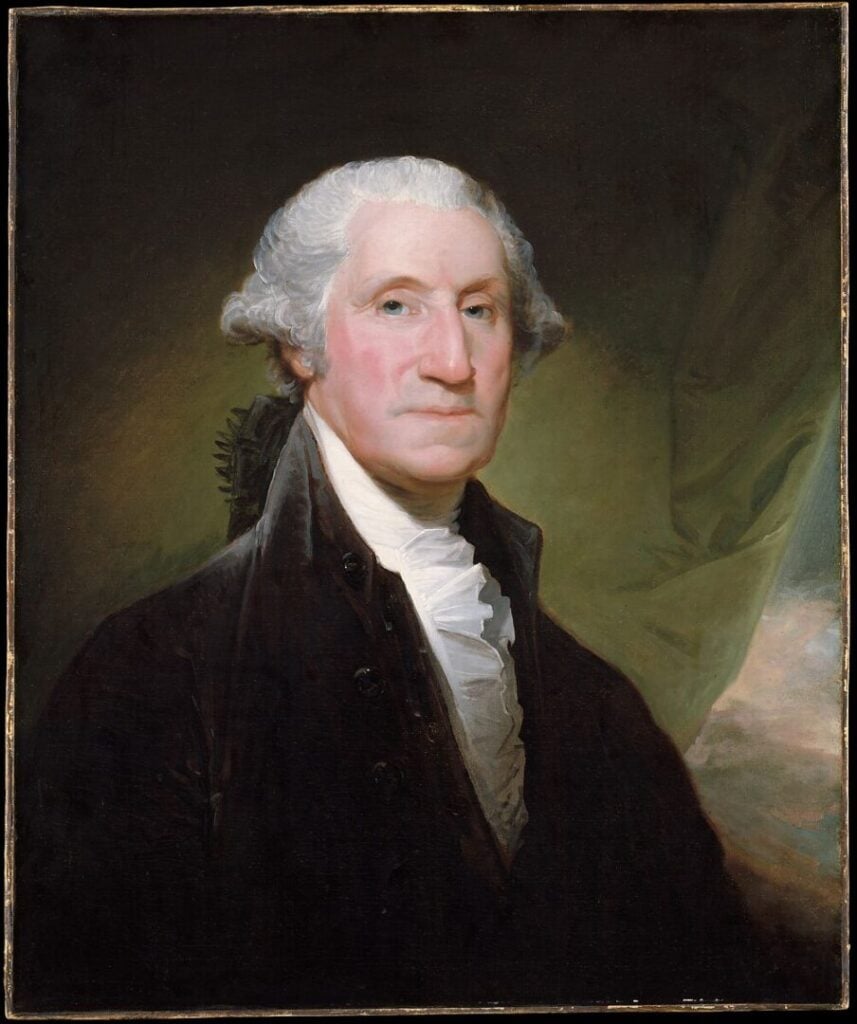
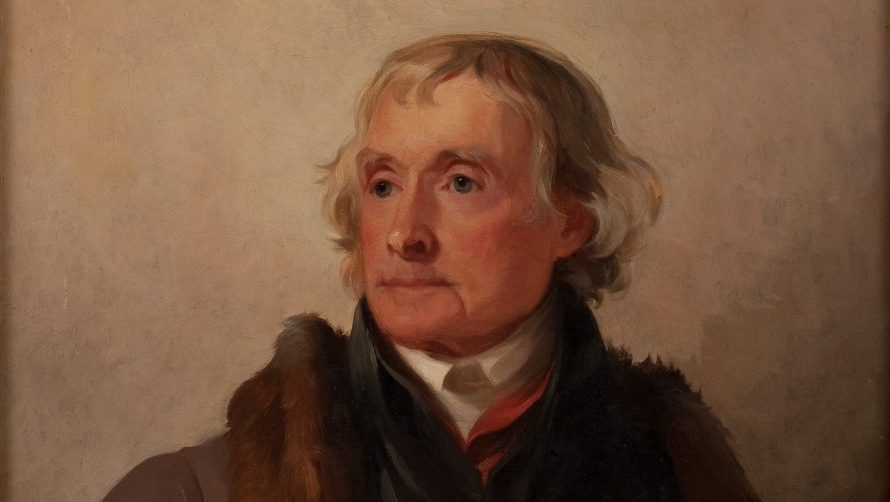
Thomas Jefferson (1743-1826) was an American Founder who famously authored the Declaration of Independence, and served as the United States’ first Secretary of State, and third President.
Next to each quote are the Topic Quote Archives in which they are included.
This Quote Archive is being continuously updated as research continues. Quotes marked with “***” have not yet been organized into their respective Topic Quote Archives.
Letters and Private Documents
Thomas Jefferson, To John Harvie (January 14, 1760)
And on the other hand by going to the college I shall get a more universal acquaintance, which may hereafter be serviceable to me, and I suppose I can pursue my studies in the Greek and Latin as well there as here, and likewise learn something of the mathematics. I shall be glad of your opinion.
Thomas Jefferson, To Thomas Turpin (February 5, 1769)
Study of Law
I always was of opinion that the placing a youth to study with an attorney was rather a prejudice than a help…The only help a youth wants is to be directed what books to read, and in what order to ream them. I have accordingly recommended strongly to Phill [sic] to put himself into apprenticeship with no one, but to employ his time for himself alone. To enable him to do this to advantage I have laid down a plan of study which will afford him all the assistance a tutor could, without subjecting him to the inconvenience of expending his own time for the emolument of another. One difficulty only occurs, that is, the want of books…a proper collection of books must have been provided for him before he engaged in the practice of his profession, for a lawyer without books would be like a workman without tools.
Thomas Jefferson, Notes on Episcopacy (October 11-December 9, 1776)
The epistles of Paul to Timothy & Titus are relied on (together with tradition) for the Apostolic institution of bishops.
As to tradition, if we are protestants we reject all tradition, & rely on the scripture alone, for that is the essence & common principle of all the protestant churches…
[A]nother plea for Episcopal government. in Religion in England is its similarity to the political government. by a king. No bishop no king. This then with us is a plea for government. by a presbytery which resembles republican government.
The clergy have ever seen this. the bishops were always mere tools of the crown.
The Presbyterian spirit is known to be so congenial with friendly liberty, that the patriots after the restoration finding that the humor of people was running too strongly to exalt the prerogative of the crown, promoted the dissenting interest as a check and balance, & thus was produced the Toleration act.
Thomas Jefferson, To Chastellux (November 26, 1782)
A single event wiped away all my plans and left me a blank which I had not the spirits to fill up. In this state of mind, an appointment from Congress found me requiring me to cross the Atlantic. And that temptation might be added to duty I was informed at the same time from his Excellency the Chevalier de Luzerne that a vessel of force would be sailing about the middle of December in which you would be passing to France. I accepted the appointment and my only object now is so to hasten over those obstacles which would retard my departure as to be ready to join you in your voyage, fondly measuring your affections by my own presuming your consent.
Thomas Jefferson, To Martha Jefferson (December 11, 1783)
The almighty has never made known to anybody at what time he created it, nor will he tell anybody when he means to put an end to it, if ever he means to do it. As to preparations for that event, the best way is for you to be always prepared for it. The only way to be so is never to do nor say a bad thing. If ever you are about to say anything amiss or to do anything wrong, consider beforehand. You will feel something within you which will tell you it is wrong and ought not to be said or done: this is your conscience, and be sure to obey it. Our maker has given us all, this faithful internal Monitor, and if you always obey it, you will always be prepared for the end of the world: or for a much more certain event which is death. This must happen to all: it puts an end to the world as to us, and the way to be ready for it is never to do a wrong act.
Thomas Jefferson, To Jean Nicolas Démeunier (June 26, 1786)
Further Reflections on Slavery
What a stupendous, what an incomprehensible machine is man! Who can endure toil, famine, stripes, imprisonment or death itself in vindication of his own liberty, and the next moment be deaf to all those motives whose power supported him through his trial [referring to the American Revolution], and inflict on his fellow men a bondage [slavery], one hour of which is fraught with more misery than ages of that which he rose in rebellion to oppose. But we must await with patience the workings of an overruling providence, and hope that that is preparing the deliverance of these our suffering brethren. When the measure of their tears shall be full, when their groans shall have involved heaven itself in darkness, doubtless a god of justice will awaken to their distress, and by diffusing light and liberality among their oppressors, or at length by his exterminating thunder, manifest his attention to the things of this world, and that they are not left to the guidance of a blind fatality.
Thomas Jefferson, To Maria Cosway (July 1, 1787)
I have not thought of you the less, but I took a peep only into Elysium. I entered it at one door and came out at another, having seen, as I past, only Turin, Milan, and Genoa. I calculated the hours it would have taken to carry me on to Rome, but they were exactly so many more than I had to spare. Was not this provoking? In thirty hours from Milan I could have been at the espousals of the Doge and the Adriatic, but I am born to lose everything I love.
Thomas Jefferson, To Buffon (October 1, 1787)
I had the honor of informing you some time ago that I had written to some of my friends in America, desiring they would send me such of the spoils of the moose, caribou, elk, and deer as might throw light on that class of animals; but more particularly to send me the complete skeleton, skin, and horns of the moose, in such condition as that the skin might be sewed up and stuffed on its arrival here…They all come from New Hampshire and Massachusetts. I give you their popular names, as it rests with yourself to decide their real names…I really suspect you will find that the moose, the round horned elk, and the American deer are species not existing in Europe.
Thomas Jefferson, To Abigail Adams (February 2, 1788)
Insulated and friendless on this side the globe [in France], with such an ocean between me and everything to which I am attached, the days seem long which are to be counted over before I too am to rejoin my native country. Young poets complain often that life is fleeting and transient. We find in it seasons and situations however which move heavily enough. It will lighten them to me if you will continue to honor me with your correspondence.
Thomas Jefferson, To Maria Cosway (April 24, 1788)
I am but a son of nature, loving what I see and feel, without being able to give a reason, nor caring much whether there be one…You must therefore now write me a letter teeming with affection such as I feel for you…God bless you!
Thomas Jefferson, To John Trumbull (February 15, 1789)
With respect to the busts and pictures I will put off till my return from America all of them except Bacon, Locke, and Newton, whose pictures I will trouble you to have copied for me: and as I consider them as the three greatest men that have ever lived, without any exception, and as having laid the foundation of those superstructures which have been raised in the physical and moral sciences, I would wish to form them into a knot on the same canvas, that they may not be confounded at all with the herd of other great men.
Thomas Jefferson, To Ebenezer Hazard (February 18, 1791)
I return you the two volumes of records, with thanks for the opportunity of looking into them. They are curious monuments of the infancy of our country. I learn with great satisfaction that you are about committing to the press the valuable historical and state papers you have been so long collecting. Time and accident are committing daily havoc on the originals deposited in our public offices. The late war has done the work of centuries in this business. The last cannot be recovered, but let us save what remains; not by vaults and locks which them from the public eye and use in consigning them to the waste of time, but by such a multiplication of copies as shall place them beyond the reach of accident.
Thomas Jefferson, To John Adams (July 17, 1791)
That you and I differ in our ideas of the best form of government is well known to us both: but we have differed as friends should do, respecting the purity of each other’s motives, and confining our difference of opinion to private conversation. And I can declare with truth in the presence of the Almighty that nothing was further from my intention or expectation than to have either my own or your name brought before the public on this occasion. The friendship and confidence which has so long existed between us required this explanation from me, and I know you too well to fear any misconstruction of the motives of it.
Thomas Jefferson, To John Adams (February 6, 1795)
I have found so much tranquility of mind in a total abstraction from everything political, that it was with some difficulty I could resolve to meddle even in the splendid project of transplanting the academy of Geneva, en masse, to Virginia [eventually the University of Virginia]; and I did it under the usual reserve of sans tirer en conséquence [“without firing accordingly”]. In truth, I have so much occupation otherwise, that I have not time for taking a part in anything of a public kind, and I therefore leave such with pleasure to those who are to live longer and enjoy their benefits. Tranquility becomes daily more and more the object of my life, and of this I certainly find more in my present pursuits than in those of any other part of my life. I recall, however, with pleasure, the memory of some of the acquaintances I have made in my progress through it, and retain strong wishes for their happiness.
Never was a finer canvass presented to work on than our countrymen. All of them engaged in agriculture or the pursuits of honest industry independent in their circumstances, enlightened as to their rights and firm in their habits of order and obedience to the laws. This I hope will be the age of experiments in government, and that their basis will be founded in principles of honesty, not of mere force. We have seen no instance of this since the days of the Roman republic, nor do we read of any before that. Either force or corruption has been the principle of every modern government, unless the Dutch perhaps be excepted, and I am not well enough informed to accept them absolutely. If ever the morals of a people could be made the basis of their own government it is our case; and who could propose to govern such a people by the corruption of a legislature, before he could have one night of quiet sleep must convince himself that the human soul as well as body is mortal. I am glad to see that whatever grounds of apprehension may have appeared of a wish to govern us otherwise than on principles of reason and honesty, we are getting the better of them. I am sure from the honesty of your heart, you join me in detestation of the corruptions of the English government, and that no man on earth is more incapable than yourself of seeing that copied among us, willingly. I have been among those who have feared the design to introduce it here, and it has been a strong reason with me for wishing there was an ocean of fire between that island and us. But away politics.
Thomas Jefferson, To John Adams (February 28, 1796)
I think that for the prompt, clear and consistent action so necessary in an executive, unity of person is necessary as with us. I am aware of the objection to this, that the office becoming more important may bring on serious discord in elections. In our country I think it will be long first; not within our day, and we may safely trust to the wisdom of our successors the remedies of the evil to arise in theirs.
Thomas Jefferson, To Gideon Granger (August 13, 1800)
What an augmentation of the field for [stock] jobbing, speculating, plundering, office-building and office-hunting would be produced by an assumption of all the state powers into the hands of the general government.
Thomas Jefferson, To Moses Robinson (March 23, 1801)
[T]he Christian religion when divested of the rags in which they have enveloped it, and brought to the original purity and simplicity of its benevolent institutor, is a religion of all others most friendly to liberty, science, and the freest expansions of the human mind.
Thomas Jefferson, To Benjamin Rush (April 9, 1803)
In some of the delightful conversations with you, in the evenings of 1798. 99. which served as an Anodyne to the afflictions of the crisis through which our country was then laboring, the Christian religion was sometimes our topic: and I then promised you that, one day or other, I would give you my views of it. they are the result of a life of inquiry and reflection, and very different from that Anti-Christian system, imputed to me by those who know nothing of my opinions. to the corruptions of Christianity, I am indeed opposed; but not to the genuine precepts of Jesus himself. I am a Christian, in the only sense in which he wished any one to be; sincerely attached to his doctrines, in preference to all others; ascribing to himself every human excellence, & believing he never claimed any other. at the short intervals, since these conversations, when I could justifiably abstract my mind from public affairs, this subject has been under my contemplation. but the more I considered it, the more it expanded beyond the measure of either my time or information. in the moment of my late departure from Monticello, I received from Doctor Priestly his little treatise of ‘Socrates and Jesus compared.’ this being a section of the general view I had taken of the field, it became a subject of reflection, while on the road, and unoccupied otherwise. the result was, to arrange in my mind a Syllabus, or Outline, of such an Estimate of the comparative merits of Christianity, as I wished to see executed, by some one of more leisure and information for the task than myself. This I now send you, as the only discharge of my promise I can probably ever execute. and, in confiding it to you, I know it will not be exposed to the malignant perversions of those who make every word from me a text for new misrepresentations and calumnies. I am moreover averse to the communication of my religious tenets to the public; because it would countenance the presumption of those who have endeavored to draw them before that tribunal, and to seduce public opinion to erect itself into that Inquisition over the rights of conscience, which the laws have so justly proscribed. It behooves every man, who values liberty of conscience for himself, to resist invasions of it in the case of others; or their case may, by change of circumstances, become his own. It behooves him too, in his own case, to give no example of concession, betraying the common right of independent opinion, by answering questions of faith, which the laws have left between God and himself.
Syllabus of an Estimate of the Merit of the Doctrines of Jesus,
Compared with Those of Others
Thomas Jefferson
Prepared for Dr. Benjamin Rush
April, 1803
In a comparative view of the ethics of the enlightened nations of antiquity, of the Jews and of Jesus, no notice should be taken of the corruptions of reason among the ancients, to wit, the idolatry and superstition of the vulgar, nor of the corruptions of Christianity by the learned among its professors.
Let a just view be taken of the moral principles inculcated by the most esteemed of the sects of ancient philosophy, or of their individuals; particularly Pythagoras, Socrates, Epicurus, Cicero, Epictetus, Seneca, Antonius.
- Philosophers.
- Their precepts related chiefly to ourselves, and the government of those passions which, unrestrained, would disturb our tranquility of mind. In this branch of philosophy, they were really great.
- In developing our duties to others, they were short and defective. They embraced, indeed, the circles of kindred and friends, and inculcated patriotism, or the love of our country in the aggregate, as a primary obligation: toward our neighbors and countrymen they taught justice, but scarcely viewed them as within the circle of benevolence. Still less have they inculcated peace, charity and love to our fellow man, or embraced with benevolence the whole family of mankind.
- Jews
- Their system was Deism; that is, the belief of one only God. But their ideas of him and his attributes were degrading and injurious.
- Their ethics were not only imperfect, but often irreconcilable with the sound dictates of reason and morality, as they respect intercourse with those around us; and repulsive and anti-social, as respecting other nations. They needed reformation, therefore, in an eminent degree.
- Jesus.
In this state of things among the Jews, Jesus appeared. His parentage was obscure; his condition poor; his education null; his natural endowments great; his life correct and innocent: he was meek, benevolent, patient, firm, disinterested, and of the sublimest [sic] eloquence.
The disadvantages under which his doctrines appear are remarkable.
- Like Socrates and Epictetus, he wrote nothing himself.
- But he had not, like them, a Xenophon or an Arian to write for him. On the contrary, all the learned of his country, entrenched in its power and riches, were opposed to him, lest his labors should undermine their advantages; and the committing to writing his life and doctrines fell on the most unlearned and ignorant men; who wrote, too, from memory, and not till long after the transactions had passed.
- According to the ordinary fate of those who attempt to enlightened and reform mankind, he fell an early victim to the jealousy and combinations of the altar and the throne, at about 33 years of age, his reason having not yet attained the maximum of its energy, nor the course of his preaching, which was but of 3 years at most, presented occasions for developing a complete system of morals.
- Hence the doctrines which he really delivered were defective as a whole, and fragments only of what he did deliver have come to us mutilated, mis-stated, and often unintelligible.
- They have been still more disfigured by the corruptions of schismatising followers, who have found an interest in sophisticated and perverting the simple doctrines he taught by engrafting on them the mysticisms of a Grecian sophist, frittering them into subtleties, and obscuring them with jargon, until they have caused good men to reject the whole in disgust, and to view Jesus himself as an imposter.
Notwithstanding these disadvantages, a system of morals is presented to us, which, if filled up in the true style and spirit of the rich fragments he left us, would be the most perfect and sublime that has ever been taught by man.
The question of his being a member of the Godhead, or in direct communication with it, claimed for him by some of his followers, and denied by others, is foreign to the present view, which is merely an estimate of the intrinsic merit of his doctrines.
- He corrected the Deism of the Jews, confirming them in their belief of one only God, and giving them juster notions of his attributes and government.
- His moral doctrines, relating to kindred and friends, were more pure [sic] and perfect than those of the most correct of the philosophers, and greatly more so than those of the Jews; and they went far beyond both in inculcating universal philanthropy, not only to kindred and friends, to neighbors and countrymen, but to all mankind, gathering all into one family, under the bonds of love, charity, peace, common wants and common aids. A development of this head will evince the peculiar superiority of the system of Jesus over all others.
- The precepts of philosophy, and of the Hebrew code, laid hold of actions only. He pushed his scrutinies into the heart of man; erected his tribunal in the region of his thoughts, and purified the waters at the fountain head.
He taught, emphatically, the doctrines of a future state, which was neither doubted, or disbelieved by the Jews; and wielded it with efficacy, as any important incentive, supplementary to the other motives to moral conduct.
Thomas Jefferson, To John Adams (October 12, 1813)
To compare the morals of the old, with those of the new testament, would require an attentive study of the former, a search through all its books for its precepts, and through all its history for its practices, and the principles they prove. as commentaries too on these, the philosophy of the Hebrews must be enquired into, their Mishna, their Gemara, Cabbala, Jezirah, Sohar, Cosri and their Talmud must be examined and understood, in order to do them full justice. Brucker, it should seem, has gone deeply into these Repositories of their ethics, and Enfield, his epitomiser, concludes in these words. “‘Ethics were so little studied among the Jews, that, in their whole compilation called the Talmud, there is only one treatise on moral subjects—Their books of Morals chiefly consisted in a minute enumeration of duties. from the law of Moses were deduced 613. precepts, which were divided into two classes, affirmative and negative, 248 in the former, and 365 in the latter—It may serve to give the reader some idea of the low state of moral philosophy among the Jews in the Middle age, to add, that of the 248. Affirmative precepts, only 3. were considered as obligatory upon women; and that, in order to obtain salvation, it was judged sufficient to fulfill any one single law in the hour of death; the observance of the rest being deemed necessary, only to increase the felicity of the future life. What a wretched depravity of sentiment & manners must have prevailed before such corrupt maxims could have obtained credit! It is impossible to collect from these writings a consistent series of moral Doctrine.’” Enfield B. 4. chap. 3. It was the reformation of this ‘wretched depravity’ of morals which Jesus undertook. In extracting the pure principles which he taught, we should have to strip off the artificial vestments in which they have been muffled by priests, who have travestied them into various forms, as instruments of riches and power to them. We must dismiss the Platonists & Plotinists, the Stagyrites & Gamalielites, the Eclectics the Gnostics & Scholastics their essences & emanations, their Logos & Demi-urgos, Aeons & Daemons male & female, with a long train of etc. etc. etc. or, shall I say at once, of Nonsense.
We must reduce our volume to the simple evangelists, select, even from them, the very words only of Jesus, paring off the Amphibologisms into which they have been led by forgetting often, or not understanding, what had fallen from him, by giving their own misconceptions as his dicta, and expressing unintelligibly for others what they had not understood themselves. There will be found remaining the most sublime and benevolent code of morals which has ever been offered to man. I have performed this operation for my own use, by cutting verse by verse out of the printed book, and arranging, the matter which is evidently his, and which is as easily distinguishable as diamonds in a dunghill. The result is an 8vo of 46. pages of pure and unsophisticated doctrines, such as were professed & acted on by the unlettered apostles, the Apostolic fathers, and the Christians of the 1st century. Their Platonizing successors indeed, in after times, in order to legitimate the corruptions which they had incorporated into the doctrines of Jesus, found it necessary to disavow, the primitive Christians, who had taken their principles from the mouth of Jesus himself, of his Apostles, & the Fathers cotemporary with them. They excommunicated their followers as heretics, branding them with the opprobrious name of Ebionites or Beggars.
For a comparison of the Grecian philosophy with that of Jesus, materials might be largely drawn from the same source. Enfield gives a history, & detailed account of the opinions & principles of the different sects. These relate to
the gods, their natures, grades, places and powers;
the demi-gods and daemons, and their agency with man;
the Universe, its structure, extent, production and duration;
the origin of things from the elements of fire, water, air and earth;
the human soul, its essence and derivation;
the summum bonum, and finis bonorum; with a thousand idle dreams & fancies on these and other subjects the knowledge of which is withheld from man, leaving but a short chapter for his moral duties, and the principal section of that given to what he owes himself, to precepts for rendering him impassible, and unassailable by the evils of life, and for preserving his mind in a state of constant serenity.
Such a canvas is too broad for the age of seventy, and especially of one whose chief occupations have been in the practical business of life. We must leave therefore to others, younger & more learned than we are, to prepare this euthanasia for Platonic Christianity, and its restoration to the primitive simplicity of its founder. I think you give a just outline of the theism of the three religions when you say that the principle of the Hebrew was the fear, of the Gentile the honor, & of the Christian the love of God.
An expression in your letter of Sep. 14. that ‘the human understanding is a revelation from its maker’ gives the best solution, that I believe can be given, of the question, what did Socrates mean by his Daemon? He was too wise to believe, & too honest to pretend that he had real and familiar converse with a superior and invisible being. He probably considered the suggestions of his conscience, or reason, as revelations, or inspirations from the Supreme mind, bestowed, on important occasions, by a special superintending providence.
I acknowledge all the merit of the hymn of Cleanthes to Jupiter, which you ascribe to it. It is as highly sublime as a chaste and correct imagination can permit itself to go. Yet in the contemplation of a being so superlative, the hyperbolic flights of the Psalmist may often be followed with approbation, even with rapture; and I have no hesitation in giving him the palm over all the Hymnists of every language, and of every time. Turn to the 148th Psalm in Brady and Tate’s version. Have such conceptions been ever before expressed?…Even Sternhold, the leaden Sternhold, kindles, in a single instance, with the sublimity of his original, and expresses the majesty of God descending on the earth, in terms not unworthy of the subject.
‘The Lord descended from above And bowed the heav’ns most high;
And underneath his feet he cast The darkness of the sky.
On Cherubim and Seraphim Full royally he rode;
And on the wings of mighty winds Came flying all abroad.’
Psalm XVIII. 9. 10…
On the subject of the Postscript of yours of Aug. 16. and of Mrs. Adams’s letter, I am silent [about the death of Nabby]. I know the depth of the affliction it has caused, and can sympathize with it the more sensibly, inasmuch as there is no degree of affliction, produced by the loss of those dear to us which experience has not taught me to estimate. I have ever found time and silence the only medicine, and these but assuage, they never can suppress, the deep-drawn sigh which recollection forever brings up, until recollection and life are extinguished together.
Thomas Jefferson, To Edward Coles (August 25, 1814)
Thomas Jefferson and Slavery
Mine [sentiments] on the subject of the slavery of negroes have long since been in possession of the public, and time has only served to give them stronger root. the love of justice and the love of country plead equally the cause of these people, and it is a [moral] reproach to us that they should have pleaded it so long in vain, and should have produced not a single effort, nay I fear not much serious willingness to relieve them and ourselves from our present condition of moral and political reprobation. From those of the former generation who were in the fullness of age when I came into public life, which was while our controversy with England was on paper only, I soon saw that nothing was to be hoped. Nursed and educated in the daily habit of seeing the degraded condition, both bodily and mental, of those unfortunate beings, not reflecting that that degradation was very much the work of themselves and their fathers, few minds had yet doubted but that they were as legitimate subjects of property as their horses or cattle. The quiet and monotonous course of colonial life had been disturbed by no alarm, and little reflection on the value of liberty. And when alarm was taken at an enterprise on their own, it was not easy to carry them the whole length of the principles which they invoked for themselves…
From an early stage of our revolution other and more distant duties were assigned to me, so that from that time till my return from Europe in 1789. And I may say till I returned to reside at home in 1809. I had little opportunity of knowing the progress of public sentiment here on this subject. I had always hoped that the younger generation, receiving their early impressions after the flame of liberty had been kindled in every breast, and had become as it were the vital spirit of every American, that the generous temperament of youth, analogous to the motion of their blood, and above the suggestions of avarice, would have sympathized with oppression wherever found, and proved their love of liberty beyond their own share of it. But my intercourse with them, since my return, has not been sufficient to ascertain that they had made towards this point the progress I had hoped. Your solitary but welcome voice is the first which has brought this sound to my ear; and I have considered the general silence which prevails on this subject as indicating an apathy unfavorable to every hope. Yet the hour of emancipation is advancing in the march of time. It will come; and whether brought on by the generous energy of our own minds, or by the bloody process of St. Domingo…is a leaf of our history not yet turned over.
As to the method by which this difficult work is to be effected, if permitted to be done by ourselves, I have seen no proposition so expedient on the whole, as that of emancipation of those born after a given day, and of their education and expatriation at a proper age. This would give time for a gradual extinction of that species of labor and substitution of another, and lessen the severity of the shock which an operation so fundamental cannot fail to produce. The idea of emancipating the whole at once, the old as well as the young, and retaining them here, is of those only who have not the guide of either knowledge or experience of the subject. For, men, probably of any color, but of this color we know, brought up from their infancy without necessity for thought or forecast, are by their habits rendered as incapable as children of taking care of themselves, and are extinguished promptly wherever industry is necessary for raising the young. In the mean time they are pests in society by their idleness, and the depredations to which this leads them. Their amalgamation with the other color produces a degradation to which no lover of his country, no lover of excellence in the human character can innocently consent.
I am sensible of the partialities with which you have looked towards me as the person who should undertake this salutary but arduous work. but this, my dear Sir, is like bidding old Priam to buckle the armor of Hector ‘trementibus aevo humeris et inutile ferrum cingi.’ [“Armor, long unused, on shoulders trembling with age,” from Virgil, Aeneid, 2.509-11] No. I have over-lived the generation with which mutual labors and perils begat mutual confidence and influence. This enterprise is for the young; for those who can follow it up, and bear it through to its consummation. It shall have all my prayers, and these are the only weapons of an old man. But in the meantime are you right in abandoning this property, and your country with it? I think not. My opinion has ever been that, until more can be done for them, we should endeavor, with those whom fortune has thrown on our hands, to feed and clothe them well, protect them from ill usage, require such reasonable labor only as is performed voluntarily by freemen, and be led by no repugnancies to abdicate them, and our duties to them. The laws do not permit us to turn them loose, if that were for their good: and to commute them for other property is to commit them to those whose usage of them we cannot control. I hope then, my dear Sir, you will reconcile yourself to your country [Virginia] and its unfortunate condition; that you will not lessen its stock of sound disposition by withdrawing your portion from the mass. That, on the contrary you will come forward in the public councils, become the Missionary of this doctrine truly Christian, insinuate and inculcate it softly but steadily through the medium of writing and conversation, associate others in your labors, and when the phalanx is formed, bring on and press the proposition perseveringly until its accomplishment. It is an encouraging observation that no good measure was ever proposed which, if duly pursued, failed to prevail in the end. We have proof of this in the history of the endeavors in the British parliament to suppress that very trade which brought this evil on us [referring to the 1807 British law, advocated by the famous abolitionist William Wilberforce, that abolished the British slave trade]. And you will be supported by the religious precept “be not wearied in well doing” [Gal. 6:9; 2 Thess. 3:13]. That your success may be as speedy and complete, as it will be of honorable and immortal consolation to yourself I shall as fervently and sincerely pray as I assure you of my great friendship and respect.
Thomas Jefferson, Additional Note for Destutt de Tracy’s Treatise on Political Economy (c. May 18, 1816)
To take from one, because it is thought that his own industry and that of his father[s?] has acquired too much, in order to spare to others, who, or whose fathers have not exercised equal industry and skill, is to violate arbitrarily the first principle of association, “the guarantee to every one of a free exercise of his industry, and the fruits acquired by it.” If the overgrown wealth of an individual be deemed dangerous to the state, the best corrective is the law of equal inheritance to all in equal degree: and the better as this enforces a law of nature, while extra-taxation violates one.
Thomas Jefferson, To John Taylor (May 28, 1816)
And I sincerely believe with you, that banking establishments are more dangerous than standing armies; and that the principle of spending money to be paid by posterity, under the name of funding, is but swindling futurity on a large scale.
Thomas Jefferson, To George Logan (November 12, 1816)
England exhibits the most remarkable phenomenon in the universe in the contrast between the profligacy of its government and the probity of its citizens. And accordingly it is now exhibiting an example of the truth of the maxim that virtue and interest are inseparable. It ends, as might have been expected, in the ruin of its people. But this ruin will fall heaviest, as it ought to fall, on that hereditary aristocracy which has for generations been preparing the catastrophe. I hope we shall take warning from the example and crush in its birth the aristocracy of our monied corporations which dare already to challenge our government to a trial of strength, and to bid defiance to the laws of their country.
Thomas Jefferson, To William Short (April 13, 1820)
But while this Syllabus is meant to place the character of Jesus in its true and high light, as no imposter himself, but a great Reformer of the Hebrew code of religion, it is not to be understood that I am with him in all his doctrines. I am a Materialist; he takes the side of spiritualism: he preaches the efficacy of repentance towards forgiveness of sin, I require a counterpoise of good works to redeem it etc. etc.
It is the innocence of his character, the purity & sublimity of his moral precepts, the eloquence of his inculcations, the beauty of the apologues in which he conveys them, that I so much admire; sometimes indeed needing indulgence to Eastern hyperbolism. My eulogies too may be founded on a postulate which all may not be ready to grant. Among the sayings & discourses imputed to him by his biographers, I find many passages of fine imagination, correct morality, and of the most lovely benevolence: and others again of so much ignorance, so much absurdity, so much untruth; charlatanism, and imposture, as to pronounce it impossible that such contradictions should have proceeded from the same being. I separate therefore the gold from the dross; restore to him the former, & leave the latter to the stupidity of some, and roguery of others of his disciples.
Of this band of dupes and impostors, Paul was the great Coryphaeus, and first corrupter of the doctrines of Jesus. These palpable interpolations and falsifications of his doctrines led me to try to sift them apart. I found the work obvious and easy, and that his part composed the most beautiful morsel of morality which has been given to us by man. The Syllabus is therefore of his doctrines, not all of mine. I read them as I do those of other antient and modern moralists, with a mixture of approbation and dissent…
The serious enemies are the priests of the different religious sects, to whose spells on the human mind its improvement is ominous. their pulpits are now resounding with denunciations against the appointment of Dr. Cooper whom they charge as a Monotheist in opposition to their tritheism. hostile as these sects are in every other point, to one another, they unite in maintaining their mystical theogony against those who believe there is one god only. the Presbyterian clergy are loudest, the most intolerant of all sects, the most tyrannical, and ambitious; ready at the word of the lawgiver, if such a word could be now obtained, to put the torch to the pile, and to rekindle in this virgin hemisphere, the flames in which their oracle Calvin consumed the poor Servetus, because he could not find in his Euclid the proposition which has demonstrated that three are one, and one is three, nor subscribe to that of Calvin that magistrates have a right to exterminate all heretics to Calvinistic creed.
They pant to reestablish by law that holy inquisition, which they can now only infuse into public opinion. we have most unwisely committed to the hierophants of our particular superstition, the direction of public opinion, that lord of the Universe. we have given them stated and privileged days to collect and catechize us, opportunities of delivering their oracles to the people in mass, and of molding their minds as wax in the hollow of their hands. but, in despite of their fulminations against endeavors to enlighten the general mind, to improve the reason of the people, and encourage them in the use of it, the liberality of this state will support this institution, and give fair play to the cultivation of reason…
Foreseeing the Civil War
Although I had laid down, as a law to myself, never to write, talk, or even think of politics, to know nothing of public affairs & therefore had ceased to read newspapers. yet the Missouri question aroused and filled me with alarm. the old schism of federal and republican, threatened nothing, because it existed in every state, and united them together by the fraternism of party. but the coincidence of a marked principle, moral & political with a geographical line, once conceived, I feared would never more be obliterated from the mind; that it would be recurring on every occasion & renewing irritations, until it would kindle such mutual & mortal hatred, as to render separation preferable to eternal discord. I have been among the most sanguine in believing that our Union would be of long duration. I now doubt it much, and see the event at no great distance, and the direct consequence of this question: not by the line which has been so confidently counted on. the laws of nature control this: but by the Potomac Ohio, and Missouri, or more probably the Mississippi upwards to our Northern boundary. my only comfort & confidence is that I shall not live to see this: and I envy not the present generation the glory of throwing away the fruits of their fathers sacrifices of life and fortune, and of rendering desperate the experiment which was to decide ultimately whether man is capable of self-government? this treason against human hope will signalize their epoch in future history, as the counterpart of the medal of their predecessors.
Thomas Jefferson, To Jacob de la Motta (September 1, 1820)
Thomas Jefferson returns his thanks to Doctor de la Motta for the eloquent discourse on the Consecration of the Synagogue of Savannah which he has been so kind as to send him. It excites in him the gratifying reflection that his own country has been the first to prove to the world two truths, the most salutary to human society, that man can govern himself, and that religious freedom is the most effectual anodyne against religious dissension: the maxim of civil government being reversed in that of religion, where it’s true form is “divided we stand, united we fall.” He is happy in the restoration, of the Jews particularly, to their social rights, and hopes they will be seen taking their seats on the benches of science, as preparatory to their doing the same at the board of government.
Thomas Jefferson, To Dr. Benjamin Waterhouse (June 26, 1822)
Christianity and Calvinism
The doctrines of Jesus are simple, and tend all to the happiness of man.
1. That there is one only God, and he all perfect.
2. That there is a future state of rewards and punishments.
3. That to love God with all thy heart and they neighbor as thyself, is the sum of religion. [Matt. 22:36-40; Mark 12:30-31; Luke 10:27] These are the great points on which he endeavored to reform the religion of the Jews.
But compare with these the demoralizing dogmas of Calvin:
1. That there are three Gods:
2. That good works, or the love of our neighbor are nothing:
3. That Faith is everything; and the more incomprehensible the proposition, the more merit in its faith:
4. That Reason in religion is of unlawful use:
5. That God, from the beginning, elected certain individuals to be saved and certain others to be damned; and that no crimes of the former can damn them, no virtues of the latter save.
Now which of these is the true and charitable Christian? he who believes and acts on the simple doctrines of Jesus? or the impious dogmatists of Athanasius and Calvin? verily, I say that these are the false shepherds, foretold as to enter, not by the door into the sheep-fold, but to climb up some other way. they are mere Usurpers of the Christian name, teaching a Counter-religion, made up of the deliria of crazy imaginations, as foreign from Christianity as is that of Mahomet. Their blasphemies have driven thinking men into infidelity, who have too hastily rejected the supposed Author himself, with the horrors so falsely imputed to him.
Had the doctrines of Jesus been preached always as purely as they came from his lips, the whole civilized world would now have been Christian. I rejoice that in this blessed country of free enquiry and belief, which has surrendered it’s creed and conscience to neither kings nor priests, the genuine doctrine of one only God is reviving, and I trust that there is not a young man now living in the US who will not die an Unitarian.
But much I fear that when this great truth shall be re-established, its Votaries will fall into the fatal error of fabricating formulas of creed, and Confessions of faith, the engines which so soon destroyed the religion of Jesus, and made of Christendom a mere Aceldama: that they will give up morals for mysteries, and Jesus for Plato. How much wiser are the Quakers, who, agreeing in the fundamental doctrines of the gospel, schismatize about no mysteries, and keeping within the pale of Common sense, suffer no speculative differences of opinion, any more than of feature, to impair the love of their brethren. Be this the wisdom of Unitarians; this the holy mantle, which shall cover within its charitable circumference all who believe in one God. and who love their neighbor.
Thomas Jefferson, To Dr. Thomas Cooper (November 2, 1822)
The atmosphere of our country is unquestionably 1463 | 1464 charged with a threatening cloud of fanaticism, lighter in some parts, denser in others, but too heavy in all. I had no idea, however, that in Pennsylvania, the cradle of toleration and freedom of religion, it could have arisen to the height you describe. This must be owing to the growth of Presbyterianism.
The blasphemy and absurdity of the five points of Calvin, and the impossibility of defending them, render their advocates impatient of reasoning, irritable, and prone to denunciation. In Boston, however, and its neighborhood, Unitarianism has advanced to so great strength, as now to humble this haughtiest of all religious sects; insomuch that they condescend to interchange with them and the other sects, the civilities of preaching freely and frequently in each other’s meeting-houses.
In Rhode Island, on the other hand, no sectarian preacher will permit a Unitarian to pollute his desk. In our Richmond there is much fanaticism, but chiefly among the women. They have their night meetings and praying parties, where, attended by their priests, and sometimes by a hen-pecked husband, they pour forth the effusions of their love to Jesus, in terms as amatory and carnal, as their modesty would permit them to use to a mere earthly lover.
In our village of Charlottesville, there is a good degree of religion, with a small price only of fanaticism. We have four sects, but without either church or meeting-house. The courthouse is the common temple, one Sunday in the month to each. Here, Episcopalian and Presbyterian, Methodist and Baptist, meet together, join in hymning their Maker, listen with attention and devotion to each others’ preachers, and all mix in society with perfect harmony.
It is not so in the districts where Presbyterianism prevails undividedly. Their ambition and tyranny would tolerate no rival if they had power. Systematical in grasping at an ascendancy over all other sects, they aim, like the Jesuits, at engrossing the education of the country, are hostile to every institution which they do not direct, and jealous at seeing others begin to attend at all to that object.
The diffusion of instruction, to which there is now so growing an attention, will be the remote remedy to this fever of fanaticism; while the more proximate one will be the progress of Unitarianism. That this will, ere long, be the religion of the majority from north to south, I have no doubt.
In our university you know there is no Professorship of Divinity. A handle has been made of this, to disseminate an idea that this is an institution, not merely of no religion, but against all religion. Occasion was taken at the last meeting of the Visitors, to bring forward an idea that might silence this calumny, which weighed on the minds of some honest friends to the institution.
In our annual report to the legislature, after stating the constitutional reasons against a public establishment of any religious instruction, we suggest the expediency of encouraging the different religious sects to establish, each for itself, a professorship of their own tenets, on the confines of the university, so near as that their students may attend the lectures there, and have the free use of our library, and every other accommodation we can give them; preserving, however, their independence of us and of each other. This fills the chasm objected to ours, as a defect in an institution professing to give instruction in all useful sciences.
I think the invitation will be accepted, by some sects from candid intentions, and by others from jealousy and rivalship. And by bringing the sects together, and mixing them with the mass of other students, we shall soften their asperities, liberalize and neutralize their prejudices, and make the general religion a religion of peace, reason, and morality…
I have heard with regret of disturbances on the part of the Students in your seminary. the article of discipline is the most difficult in American education. premature ideas of independence, too little repressed by parents, beget a spirit of insubordination, which is the great obstacle to science with us, and a principal cause of its decay since the revolution. I look to it with dismay in our institution, as a breaker ahead which I am far from being confident we shall be able to weather. The advance of age, and the tardy pace of the public patronage may probably spare me the pain of witnessing consequences.
Thomas Jefferson, To Albert Gallatin (December 26, 1820)
I hope a tax will be preferred [to printing money] because it will awaken the attention of the people, and make reformation and economy the principles of the next election. The frequent recurrence of this chastening operation can alone restrain the propensity of governments to enlarge expense beyond income.
Thomas Jefferson, To William Branch Giles (December 26, 1825)
[T]his opens with a vast accession of strength from their younger recruits, who having nothing in them of the feelings or principles of ’76 now look to a single and splendid government of an Aristocracy, founded on banking institutions and monied in corporations under the guise and cloak of their favored branches of manufactures commerce and navigation, riding and ruling over the plundered ploughman and beggared yeomanry. This will be to them a next best blessing to the Monarchy of their first aim, and perhaps the surest stepping stone to it.
 Buy Us a Coffee