Introduction
This mini-series will show, from Scripture, how the Catholic Church is the “Messianic Kingdom of Apostolic Thrones,” and why this necessarily entails the Catholic doctrines of apostolic succession, as well as the infallibility and indefectibility of the Church.
By “apostolic succession” we mean the teaching that the Church on earth, under the reign of Christ Her King in heaven, is ruled by apostolic authority exercised by the successors of the Apostles, preeminently the successor of St. Peter, the Pope.
By “infallibility” we mean the teaching that the Church is immune from error in the official exercise of its apostolic teaching authority for all Christians on matters of faith and morals.
Finally, by “indefectibility” we mean the teaching that the Church, as Christ’s Spouse with whom He has become one body forever, will continue to be a visible, infallible society until Christ’s return, and thus never fully apostatize (defect) from Our Lord.
But before we prove these Catholic dogmas from Scripture, we must first set the stage in an admittedly unique way by discussing a topic that may seem unrelated, but is vital to establishing their biblical foundations, namely, when Christ began to reign as King.
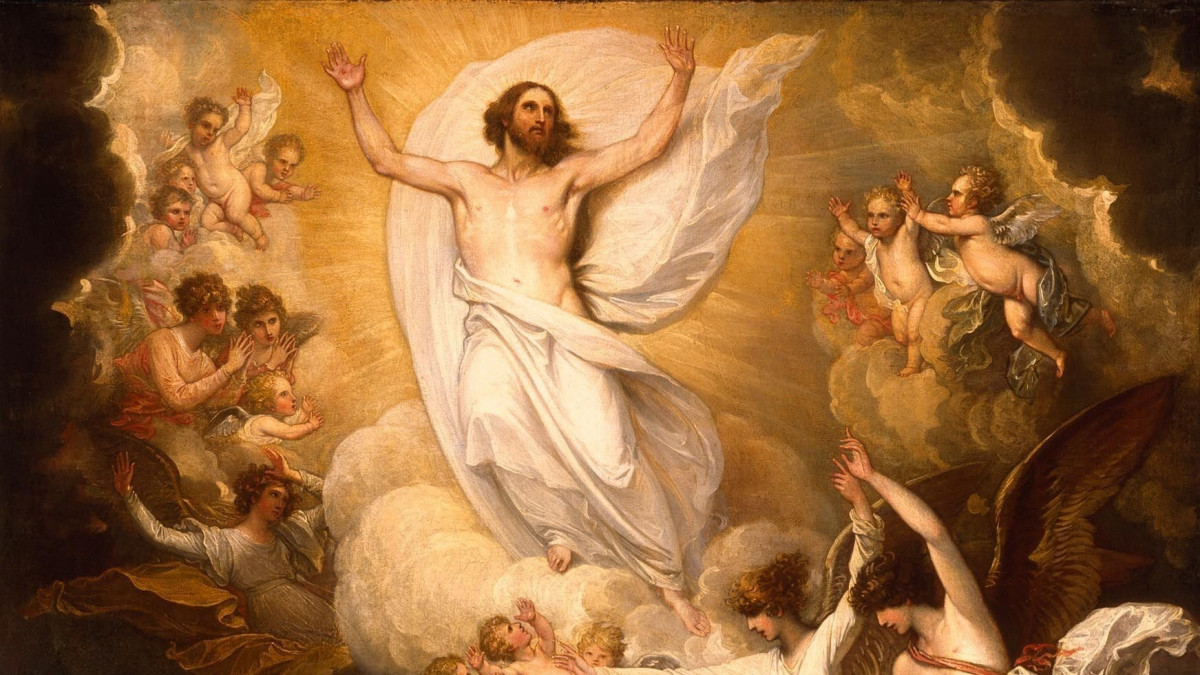
We will show that the clear testimony of Scripture is that Christ began to fully reign as King of the Messianic Kingdom upon His Ascension into heaven in the first century.
While the importance of this theological fact is often not recognized, it nevertheless plays a vital role in laying the biblical foundation for apostolic succession, as well as the infallibility and indefectibility of the Church. If in fact Christ began to reign as King of the Messianic Kingdom in the first century, this is important—particularly with respect to debates with protestants (and to a lesser extent apostolic churches not in full communion with the Catholic Church)—for the following reasons:
- Christ’s descriptions of His Church as a kingdom, and the promises He makes to it, must be understood as the beginning of the fulfillment of the Old Testament prophecies of the Messianic Kingdom.
- The Old Testament prophecies of the Messianic Kingdom must refer to something that began in the first century, and therefore can’t be dismissed as referring only, or even primarily, to an unrealized eschatological future that will be fulfilled only by Christ’s return.
- The Old Testament prophecies’ descriptions of a unified, indestructible, authoritative kingdom spread from one end of the earth to the other in which the Messiah exercises judgment must refer to this same kingdom over which Christ began to reign in the first century.
In short, if Christ began to reign as King of the Messianic Kingdom in the first century, this becomes the basis for looking to the Old Testament as a far deeper well of teaching on ecclesiology (theology of the Church) than most people (particularly protestants) realize. Indeed, the Church Fathers themselves often read the Old Testament in precisely this way, and refuted various heresies and schisms in their own day by showing that only the Catholic Church fulfilled the reality of this Messianic Kingdom prophesied throughout the Old Testament Scriptures. That reality included infallibility and indefectibility.
Roadmap
With that in mind, our Roadmap is as follows:
- Our thesis for this series is that the Church is the Messianic Kingdom prophesied by the Old Testament, and preached by Christ and the Apostles. If true, this provides great biblical weight to the doctrines of apostolic succession, as well as the infallibility and indefectibility of the Church. Our thesis in Part 1 of this series is that this Messianic Kingdom formally began with Christ’s Ascension into heaven, which marks the point at which He took up His throne as the Son of David. We will show this by:
- First, summarizing the doctrines of apostolic succession, infallibility, and indefectibility, and provide a brief overview of how they are relevant to this issue; we will then
- Show that Jesus taught that He would establish a kingdom that He would govern as king through the thrones of the Apostles and their successors that would begin at His Ascension when He sat on His heavenly throne as the final and definitive Davidic king; then
- Proving that His Ascension was the point at which He began to fully rule as King of the Messianic Kingdom; and concluding with
- A summary of our case.
Dogmatic Summary: Apostolic Succession, Infallibility, and Indefectibility
The Catholic doctrines of apostolic succession, infallibility, and the indefectibility of the Church, are tightly bound together.
Here is a brief summary, some of which we have already mentioned.
The doctrine of apostolic succession teaches that the Church on earth, under the reign of Christ Her King in heaven, is ruled by apostolic authority exercised by the successors of the Apostles, preeminently the successor of St. Peter, the Pope.
The doctrine of the infallibility of the Church teaches that the Church is immune from error in the official exercise of its apostolic teaching authority for all Christians on matters of faith and morals.
Finally, the doctrine of the indefectibility of the Church teaches that the Church, as Christ’s Spouse with whom He has become one body forever, will continue to be a visible, infallible society until Christ’s return, and thus never fully apostatize (defect) from Our Lord.
The reason the seemingly unrelated question of when Christ began to reign as king is so important to proving these Catholic doctrines from Scripture is because each of them revolve around a single issue: the nature of Christ’s Kingdom. Apostolic succession concerns who exercises the kingdom’s authority. Infallibility concerns how the kingdom’s authority is exercised. Indefectibility concerns the visible and invincible nature of the kingdom itself. Thus, these three doctrines concern the nature of Christ’s kingdom—His Church—as a polity: its structure, who governs, how far their authority extends, and for how long it will endure.
But before we dive into these matters in future installments, we must first determine when Christ’s Kingdom began.
I realized this only after I began studying the topic of eschatology (theology of the “final things,” or more loosely, the “end times”). As a protestant, I had been exposed to many opinions about various eschatological matters. On this topic, perhaps no part of Scripture was more debated than Apocalypse 20, specifically the meaning and timing of the “thousand years” of the millennial kingdom mentioned in verses 4-6. Naturally, if we know when Christ’s kingdom began, we can arguably speak with much greater certainty about the nature and timing of this millennial kingdom.
Determining when Christ’s kingdom began also determines whether or not Old Testament prophecies of the Messianic Kingdom will be relevant to the nature of the Church over the past 2,000 years (which would fit most comfortably with the “Amillennial” view of Apocalypse 20), or purely/primarily refers to yet-to-be fulfilled eschatological realities (which would fit most comfortably the “Premillennial” view of Apocalypse 20).
If the fulfillment of the Old Testament prophecies of the Messianic Kingdom are entirely or primarily in the future, then they are far less relevant to the nature of the Church that began in the first century. However, if the kingdom to which they pointed began to be definitively fulfilled from the first century to the present day, then these prophecies are vital to understanding the nature of the Church, as well as the events of Christian history.
Thus, what is at stake is whether Christ’s reign as king can be sequestered into a purely futuristic kingdom that has not yet truly appeared (and thus, to varying degrees, is separated from the nature and history of the Church over the last 2,000 years); or whether that reign actually began in the first century, along with all the implications of that fact.
We will show that Christ began to reign as king over His Messianic Kingdom in the first century. The profound consequences of this fact will be unpacked in future installments.
The Beginning of Jesus’s Kingdom, and the Setting up of Apostolic Thrones (Matthew 19, Luke 22, and Apocalypse 20)
Fortunately, Scripture provides a plethora of information that enables us to know with great precision and certainty when Christ began to reign as king.
First, in St. Matthew’s Gospel, Our Lord speaks with His Apostles of “the new world” that is coming. In this “new world,” the Apostles will exercise judgment over God’s people (Matt. 19:28):
28 Jesus said to them, “Truly, I say to you, in the new world, when the Son of man shall sit on his glorious throne, you who have followed me will also sit on twelve thrones, judging the twelve tribes of Israel.
Note a very important detail as to when this “new world” will begin: “when the Son of man shall sit on his glorious throne.” This “new world” is one in which Christ’s Kingdom has been established. As we shall see, it began at His Ascension. We are also told that in this “new world,” the Apostles will sit on thrones (i.e. cathedra in Latin, the root of the word “cathedral,” the home church of bishops).
In St. Luke’s Gospel, the same exchange is recorded, but Our Lord is even more explicit that He is referring to His Messianic Kingdom (Luke 22:28-30):
28 “You are those who have continued with me in my trials; 29 as my Father appointed a kingdom for me, so do I appoint for you 30 that you may eat and drink at my table in my kingdom, and sit on thrones judging the twelve tribes of Israel.
Once more, Our Lord is clear that in this new kingdom given Him to rule, He will do so with the Apostles, who will sit on thrones.
The only other time in the New Testament we see a reference to the setting up of thrones is in Apocalypse 20, after the binding of the dragon, which Scripture identifies as the Devil (Apoc. 20:4-6):
4 Then I saw thrones, and seated on them were those to whom judgment was committed. Also I saw the souls of those who had been beheaded for their testimony to Jesus and for the word of God, and who had not worshiped the beast or its image and had not received its mark on their foreheads or their hands. They came to life, and reigned with Christ a thousand years. 5 The rest of the dead did not come to life until the thousand years were ended. This is the first resurrection. 6 Blessed and holy is he who shares in the first resurrection! Over such the second death has no power, but they shall be priests of God and of Christ, and they shall reign with him a thousand years.
The full implications of this verse will be unpacked in future articles. Suffice it to say, this period of time would logically coincide with the beginning of the kingdom Christ told the Apostles they would judge on thrones, and during which other saints would reign with Christ. Note that Jesus says to the Apostles, “you who have followed me” (Matt. 19:28), that they shall receive thrones because they “have continued with me in my trials” (Luke 22:28). Likewise, in Apocalypse 20, those who reign with Christ are they who are beheaded for their faithfulness to Him (Apoc. 20:4). In Apocalypse, those who sit on these thrones are not specifically identified as Apostles, but there is undoubtedly a connection, given Jesus’s explicit assertion that thrones would be set on which they would sit. As we’ll explain further in future installments, this can only be the beginning of the “new world” Christ spoke of.
From Matthew, Luke and Apocalypse, we gather that:
- Our Lord will inaugurate a “new world” (Matt. 19:28) which is in fact the beginning of His Kingdom;
- This kingdom and “new world” will commence when He begins to sit on His throne (this takes place, as we will show, at His Ascension), and reigns over God’s people (“the twelve tribes of Israel”);
- The Apostles and “those to whom judgment was committed” (Apoc. 20:4) will exercise judgment in this kingdom from thrones.
In short, we see that Christ, the Son of David, will begin to reign over His kingdom at the beginning of a “new world” that will commence “when the Son of man shall sit on his glorious throne” (Matt. 19:28), and He will govern with the Apostles who will sit on thrones themselves, along with perhaps others “to whom judgment was committed” (Apoc. 20:4). These “others,” as we will show in future installments, are none other than the successors of the Apostles, the bishops.
That last point, about the thrones of Apocalypse 20, is extremely relevant to the topic of apostolic succession, which, as we have said, we will cover in future installments in this series. However, it is worth noting here that Psalm 122 speaks of the House of David1—the House from which Christ comes, and over which He rules as the final Davidic King—having “thrones [plural] for judgment” (Ps. 122:3-5):
3 Jerusalem, built as a city which is bound firmly together, 4 to which the tribes go up, the tribes of the Lord, as was decreed for Israel, to give thanks to the name of the Lord. 5 There thrones for judgment were set, the thrones of the house of David.
Thus, we know from the Old Testament that the house of David has “thrones” that are set for judgment. Once more, this language is oddly familiar with the language we’ve already heard in Matthew, Luke, and Apocalypse.
It’s additionally significant because this same “house” (or “dwelling”) of David is apparently referenced by St. James at the Council of Jerusalem, where he quotes the prophet Amos on the rebuilding of the “dwelling of David,” associating the time of this rebuilding with the Gospel going to the Gentiles (Acts 15:14-15):
14 “Symeon [Peter] has related how God first visited the Gentiles, to take out of them a people for his name. 15 And with this the words of the prophets agree, as it is written,
16 ‘After this I will return,
and I will rebuild the dwelling of David, which has fallen;
I will rebuild its ruins,
and I will set it up,
17 that the rest of men may seek the Lord,
and all the Gentiles who are called by my name,
18 says the Lord, who has made these things known from of old’ (Amos 9:11-12).
This is a significant passage because it indicates that the kingdom inaugurated by the Messiah over the “twelve tribes of Israel” is a Davidic kingdom—indeed, it is the final and complete fulfillment of the Davidic kingdom. It likewise includes the Gentiles, who are now engrafted into the New and Eternal Covenant God made with Abraham.
The question then becomes: when does the “new world” inaugurated by this Davidic Kingdom begin?
As Christ said, it begins “when the Son of man shall sit on his glorious throne” (Matt. 19:28), which, we will now prove, took place at His Ascension.
The Ascension: When the Messiah Begins to Sit on His Throne
Fortunately, Scripture is quite clear that Christ began to sit on His throne—and thus inaugurated the “new world”—when He ascended into heaven. We will examine the evidence for this in roughly the same order it appears in Scripture.
St. Mark’s Gospel is explicit (Mark 16:19):
19 So then the Lord Jesus, after he had spoken to them, was taken up into heaven, and sat down at the right hand of God.
Note that Christ sitting on His throne is described as being “at the right hand of God.” This language appears over and over again throughout the New Testament, and may thus be associated with the enthronement of the Messianic King. Indeed, it comes from the opening verse of a Psalm that Christ and various Apostles interpreted as Messianic (Ps. 110:1):
The Lord says to my lord: “Sit at my right hand, till I make your enemies your footstool.”
In a rather veiled and Socratic fashion, Jesus applies this verse to Himself by asking the Pharisees a question about the identity of David’s son (Matt. 22:41-46; cf. Mark 12:35-37; Luke 20:41-44):
41 Now while the Pharisees were gathered together, Jesus asked them a question, 42 saying, “What do you think of the Christ? Whose son is he?” They said to him, “The son of David.” 43 He said to them, “How is it then that David, inspired by the Spirit, calls him Lord, saying,
44 ‘The Lord said to my Lord,
Sit at my right hand,
till I put thy enemies under thy feet’ (Ps. 110:1)?45 If David thus calls him Lord, how is he his son?” 46 And no one was able to answer him a word, nor from that day did anyone dare to ask him any more questions.
What Jesus veiled with a question was declared openly at Pentecost when, quoting Psalm 16:8-11, and then the same Psalm 110:1, St. Peter authoritatively interpreted both as applying to Christ (Acts 2:24-36):
24 But God raised him up, having loosed the pangs of death, because it was not possible for him to be held by it. 25 For David says concerning him,
‘I saw the Lord always before me,
for he is at my right hand that I may not be shaken;
26 therefore my heart was glad, and my tongue rejoiced;
moreover my flesh will dwell in hope.
27 For thou wilt not abandon my soul to Hades,
nor let thy Holy One see corruption.
28 Thou hast made known to me the ways of life;
thou wilt make me full of gladness with thy presence’ (Ps. 16:8-11).29 “Brethren, I may say to you confidently of the patriarch David that he both died and was buried, and his tomb is with us to this day. 30 Being therefore a prophet, and knowing that God had sworn with an oath to him that he would set one of his descendants upon his throne, 31 he foresaw and spoke of the resurrection of the Christ, that he was not abandoned to Hades, nor did his flesh see corruption. 32 This Jesus God raised up, and of that we all are witnesses. 33 Being therefore exalted at the right hand of God, and having received from the Father the promise of the Holy Spirit, he has poured out this which you see and hear. 34 For David did not ascend into the heavens; but he himself says,
‘The Lord said to my Lord, Sit at my right hand,
35 till I make thy enemies a stool for thy feet’ (Ps. 110:1).36 Let all the house of Israel therefore know assuredly that God has made him both Lord and Christ, this Jesus whom you crucified.”
He declared the same thing before the Sanhedrin (Acts 5:29-31):
29 But Peter and the apostles answered, “We must obey God rather than men. 30 The God of our fathers raised Jesus whom you killed by hanging him on a tree. 31 God exalted him at his right hand as Leader and Savior, to give repentance to Israel and forgiveness of sins. 32 And we are witnesses to these things, and so is the Holy Spirit whom God has given to those who obey him.”
What Jesus veiled as a question, and St. Peter declared openly, St. Stephen witnessed with his own eyes just prior to his martyrdom (Acts 7:55-56):
55 But he [St. Stephen], full of the Holy Spirit, gazed into heaven and saw the glory of God, and Jesus standing at the right hand of God; 56 and he said, “Behold, I see the heavens opened, and the Son of man standing at the right hand of God.”
Indeed, Jesus uses this motif of the “right hand” several times through the Gospels, for it refers to a place of privilege and authority with the king. For example, when the king welcomes the sheep into the fullness of His eternal Kingdom (Matt. 25:34):
34 Then the King will say to those at his right hand, ‘Come, O blessed of my Father, inherit the kingdom prepared for you from the foundation of the world…’
Most notably, He uses this language to describe Himself at His trial before the Sanhedrin (Matt. 26:62-65; cf. Mark 14:61-64; Luke 22:67-71):
62 And the high priest stood up and said, “Have you no answer to make? What is it that these men testify against you?” 63 But Jesus was silent. And the high priest said to him, “I adjure you by the living God, tell us if you are the Christ, the Son of God.” 64 Jesus said to him, “You have said so. But I tell you, hereafter you will see the Son of man seated at the right hand of Power, and coming on the clouds of heaven.” 65 Then the high priest tore his robes, and said, “He has uttered blasphemy. Why do we still need witnesses? You have now heard his blasphemy…”
Jesus seems to be alluding to the end times conversion of the Jews in the “hereafter,” when “they” (presumably the leaders of the Jews, and thus the Jews as a whole) will see Him as the true Messiah, one already “seated at the right hand of Power” from which position He returns to earth. This further reinforces that His sitting at the “right hand of Power” will—in relation to His return—have been something done in the past, namely at His Ascension.
St. Paul, in his epistle to the Romans, speaks of Christ in the same way, as being at the “right hand of God.” Note that His enthronement entails an ongoing and active intercession for His people (Rom. 8:33-34):
33 Who shall bring any charge against God’s elect? It is God who justifies; 34 who is to condemn? Is it Christ Jesus, who died, yes, who was raised from the dead, who is at the right hand of God, who indeed intercedes for us?
Likewise, in 1 Corinthians, he refers to Christ’s present reign as King while all His enemies are subjected to Him, the last enemy being death (1 Cor. 15:22-27):
22 For as in Adam all die, so also in Christ shall all be made alive. 23 But each in his own order: Christ the first fruits, then at his coming those who belong to Christ. 24 Then comes the end, when he delivers the kingdom to God the Father after destroying every rule and every authority and power. 25 For he must reign until he has put all his enemies under his feet. 26 The last enemy to be destroyed is death. 27 “For God has put all things in subjection under his feet” (Ps. 8:6).
Note that for St. Paul, Christ is reigning now, as king, gathering the kingdom “God the Father.”
St. Paul speaks of the same thing in his epistle to the Ephesians (Eph. 1:15-23):
15 For this reason, because I have heard of your faith in the Lord Jesus and your love toward all the saints, 16 I do not cease to give thanks for you, remembering you in my prayers, 17 that the God of our Lord Jesus Christ, the Father of glory, may give you a spirit of wisdom and of revelation in the knowledge of him, 18 having the eyes of your hearts enlightened, that you may know what is the hope to which he has called you, what are the riches of his glorious inheritance in the saints, 19 and what is the immeasurable greatness of his power in us who believe, according to the working of his great might 20 which he accomplished in Christ when he raised him from the dead and made him sit at his right hand in the heavenly places, 21 far above all rule and authority and power and dominion, and above every name that is named, not only in this age but also in that which is to come; 22 and he has put all things under his feet and has made him the head over all things for the church, 23 which is his body, the fullness of him who fills all in all.
Note that according to St. Paul, the subjection of all things to Christ the King is “for the church, which is his body, the fullness of him who fills all in all.” It is thus quite unimaginable that the very thing for which His royal authority exists—the Church—would not Herself be maintained in Her integrity and structure (the details of which we will unpack in future installments).
St. Paul likewise asserts to the Colossians that Christ is seated on His throne above (Col. 3:1):
If then you have been raised with Christ, seek the things that are above, where Christ is, seated at the right hand of God.
The author of Hebrews—likely (and in my opinion) St. Paul—similarly references Christ presently sitting at God’s right hand multiple times. For example, in the first chapter, he says (Heb. 1:3-4, 13):
3 He reflects the glory of God and bears the very stamp of his nature, upholding the universe by his word of power. When he had made purification for sins, he sat down at the right hand of the Majesty on high, 4 having become as much superior to angels as the name he has obtained is more excellent than theirs…
13 But to what angel has he ever said,
“Sit at my right hand,
till I make thy enemies
a stool for thy feet” (Ps. 110:1)?
St. Paul affirms the same in the eighth chapter (Heb. 8:1-2):
Now the point in what we are saying is this: we have such a high priest, one who is seated at the right hand of the throne of the Majesty in heaven, 2 a minister in the sanctuary and the true tent which is set up not by man but by the Lord.
And again in the tenth chapter (Heb. 10:12-13):
12 But when Christ had offered for all time a single sacrifice for sins, he sat down at the right hand of God, 13 then to wait until his enemies should be made a stool for his feet.
And a final time in the twelfth chapter (Heb. 12:1-2):
Therefore, since we are surrounded by so great a cloud of witnesses, let us also lay aside every weight, and sin which clings so closely, and let us run with perseverance the race that is set before us, 2 looking to Jesus the pioneer and perfecter of our faith, who for the joy that was set before him endured the cross, despising the shame, and is seated at the right hand of the throne of God.
St. Peter affirms the same reality—as he did in the book of Acts—in his first epistle (1 Pet. 3:21-22):
21 Baptism, which corresponds to this, now saves you, not as a removal of dirt from the body but as an appeal to God for a clear conscience, through the resurrection of Jesus Christ, 22 who has gone into heaven and is at the right hand of God, with angels, authorities, and powers subject to him.
And finally, St. John the Beloved Disciple in the Apocalypse quotes Jesus affirming that He is in fact presently sitting down on His and His Father’s throne as a result of His conquering of death by His cross and resurrection (Apoc. 3:20-21):
20 Behold, I stand at the door and knock; if anyone hears my voice and opens the door, I will come in to him and eat with him, and he with me. 21 He who conquers, I will grant him to sit with me on my throne, as I myself conquered and sat down with my Father on his throne.
Conclusion: Christ’s Reign as King Began at the Ascension
From these words of Scripture, we can be certain that Christ began to reign as King of the Messianic Kingdom in the first century upon His Ascension into heaven, which is when He began to sit on His throne at the right hand of God the Father. Christ Himself explicitly affirms that His sitting on His throne would be the beginning of the “new world” and the kingdom ruled by Himself and the Apostles sitting on thrones. Likewise, St. Mark’s Gospel explicitly states this took place at His Ascension, which is affirmed over and over again by the Apostles.
Thus, the Davidic kingdom promised by God, about which the Psalms and the prophets prophesied throughout the Old Testament, is a kingdom that in some sense began in the first century, when its king began to sit on His throne in heaven.
While some of these prophecies will in fact be fulfilled at Christ’s return when the kingdom is fully and eternally realized in all its splendor, because of the fact that it was definitively inaugurated when Christ ascended into Heaven, we can be certain that some of these prophecies predicted the very Church that began in the first century.
Therefore, they cannot be dismissed as applying only to unfulfilled future events.
As we will see in future installments in this series, this has profound implications for the doctrines of apostolic succession, as well as the infallibility and indefectibility of the Church.
 Buy Us a Coffee